Showing posts with label Latin America. Show all posts

Monday, July 27, 2015

Holy Moly, A Publication

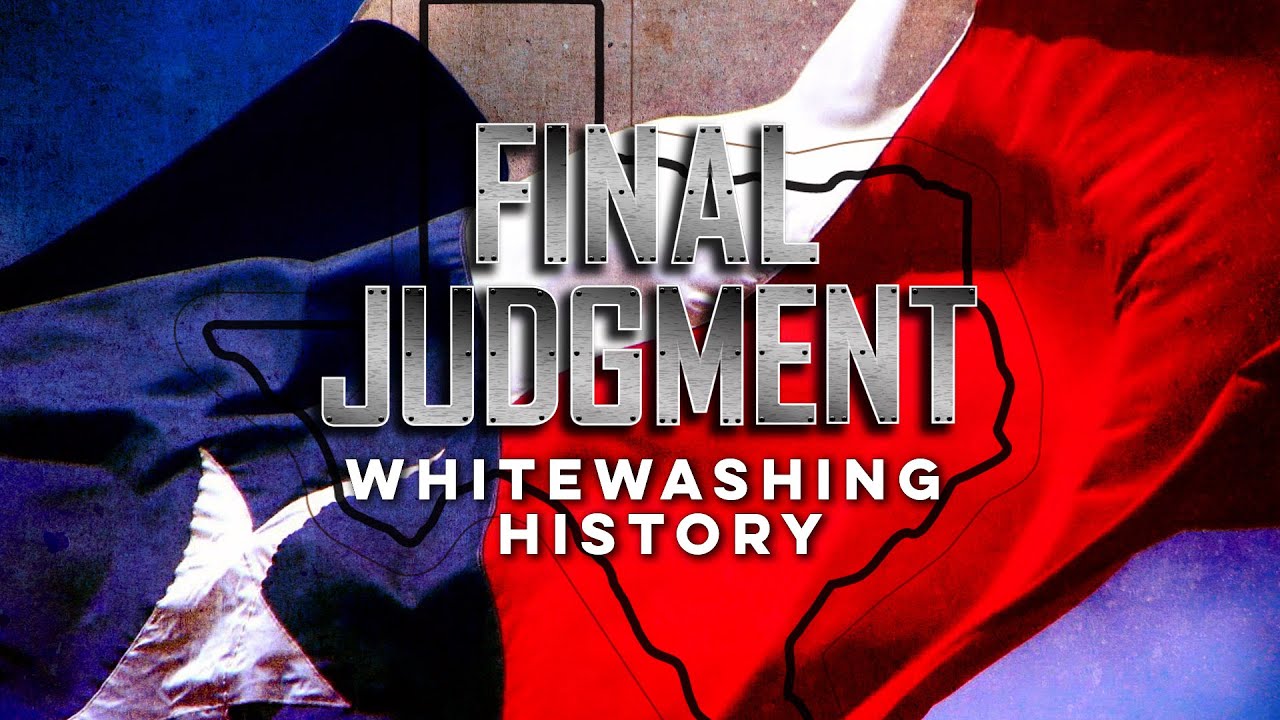
After a lot of hard work, I'm so happy to announce that my first "real" published article is out!  In spring 2014, one of my professors encouraged me to write a paper critically analyzing four graphic history books about the Battle of the Alamo, and it's one of the most fulfilling, interesting academic journeys I've ever taken.

While writing this paper, I was able to travel back to my childhood and relive wonderful memories of visiting San Antonio and learning about my home state's history.  However, I also had to confront the fact that the "official" (i.e., popular and dominant) story of the Alamo is pretty biased, inaccurate, and sometimes flat-out racist.

dramatic picture via The Young Turks

After the paper was finished, my friend and co-author, Margaret Robbins, provided some helpful input (many thanks, Margaret!), and we sent it off to Social Studies Research & Practice.  If you'd like to read the article, you can find it here.  It's an open-access online journal, so you'll be able to read the whole thing and/or download it for free.

I hope you enjoy it!

Tuesday, April 21, 2015

KidLit in Chicago

I've been yearning to go to Chicago for years now, and I finally got my chance last week when I attended the American Educational Research Association (AERA) annual meeting.  The city did not disappoint!  (I didn't want to leave.  Can I go back now?)  When I wasn't doing conference stuff, I had several opportunities to get out and explore.  Here are some highlights:


Colonial-era painting of La Virgen de Cayma (Perú) @ the Art Institute of Chicago


This looks better than any of the pictures I took.

My favoritefavoritefavorite excursion, however, was visiting the Pilsen neighborhood and the National Museum of Mexican Art on the Lower West Side.  In addition to a beautiful permanent collection -- with everything from Mesoamerican sculpture to contemporary video art -- they have a few temporary exhibits, like the brand new collection inspired by Sandra Cisneros and her landmark novel, The House on Mango Street, which is set in Chicago.


I wish I could've taken pictures of the artwork because the collection included paintings by two of my favorite artists / children's book illustrators: Carmen Lomas Garza and Rafael López.  (Photography isn't allowed in temporary exhibitions at most museums, though.  Oh well.)  Fortunately, there was another Garza painting in the permanent collection, so I snapped a picture of that one:

Las posadas (2000)

Even better, the gift shop had a great selection of Latin@ and Latin American children's books, many of which I'd never seen or heard of before.  One book that really caught my attention was El gusto del mercado mexicano / A Taste of the Mexican Market by Nancy María Grande Tabor.


In this dual language book, Tabor -- who's from Loreto, Mexico -- guides readers through a traditional market, showing them popular Mexican foods and asking questions that reinforce math and science skills (e.g., "If we choose two of each [pastry], how many will we have?" and "Which of these ripe fruits are still green?").  I love this book, not only because of what it teaches, but also because of how Tabor presents the information.  Instead of presenting this Mexican cultural practice as exotic and strange to US readers (as many books about international cultures do, unfortunately), she depicts visiting a market as an interesting (but ordinary) practice that some people do.  Good stuff.

Another great book was Lotería by Patty Rodriguez, a dual language board book by a publisher called Lil' Libros.


Each page spread features a super-cute representation of a lotería card with Spanish and English captions.  Since there are lots of bilingual babies in my life, I bought a copy and was able to test it out on my friends' seven-month-old little dude as soon as I got back to Georgia on Saturday.  He focused intently on each page, laughed when I made Spanish and English rooster noises, waved his chubby little arms, and then shoved the book in his mouth when we finished reading.  So... SUCCESS.

Chicago is a beautiful stronghold of Latin@ (especially Mexican-American) culture, so if you get a chance to visit and are in the market for some great Latin@ children's literature and cultural experiences, they can hook you up.  I miss it already.

And now I leave you with the song that's been stuck in my head for a week:

Sunday, April 12, 2015

Book Talks at Latin@s in Kid Lit :D

I don't think I've mentioned it here yet, but the lovely folks at Latin@s in Kid Lit -- a group blog run by some amazing authors, illustrators, librarians, students, and teachers -- have invited me to contribute some book reviews for their "Libros Latinos" feature.  I'm so excited to join the team!  Last month, I wrote a review of Jorge Argueta's Talking with Mother Earth / Hablando con Madre Tierra, and I have another review coming out at the end of April.

 
Here are some hints about the book I'll be discussing:
  • It's a new release.
  • It's a picture book.
  • It's tasty.
  • The illustrations connect past and present.
Can you guess?  Hope to see you over at Latin@s in Kid Lit!

Monday, February 23, 2015

Review: Nina Shor's Arte Popular

Title: Arte popular: Búscalo y encuéntralo (Folk Art: Look and Find)
Author: Nina Shor (Mexico)
Illustrator: Various artists (Mexico)
Publisher: Ediciones El Naranjo
Ages: 6+


The children's literature library in my university's education building has a great, growing collection of Spanish and dual language books, and I first noticed this title on the New Arrivals shelf a few months ago.  I love me some traditional arts and crafts and was curious to see what was inside, but I didn't have any time to stop and look at the book, so I left and forgot about it.

Until I saw the same book in that magical bookstore in Puebla and snatched it right up.

Arte popular is a treasure trove of Mexican folk art.  Each section of the book contains a different type of art from a particular region.  Large, detailed photographs, interviews with artists and craftspeople, and information about each art form's history and functions show readers how diverse and useful art can be.  For example, readers will learn that art can:

Be clothing (like huipiles in Oaxaca)

Depict religious beliefs and understandings 
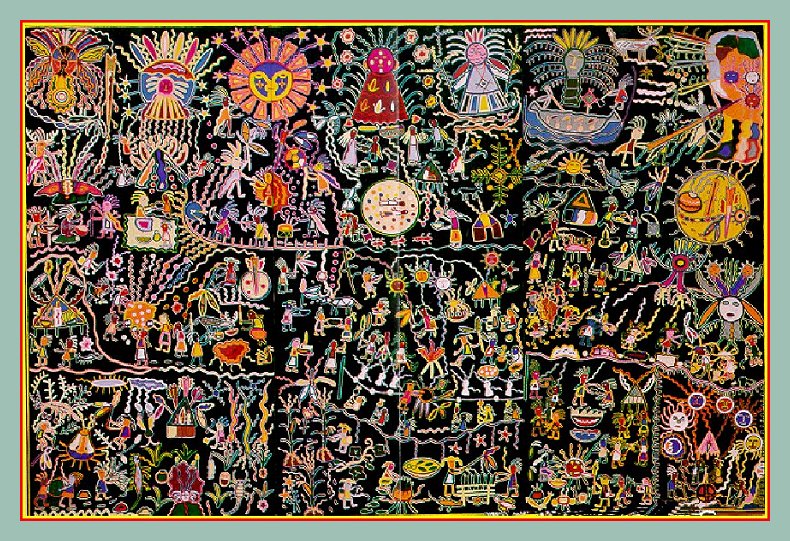
(like Huichol tapestries in Nayarit, Jalisco, Durango, and Zacatecas)

Help people observe special occasions (like papel picado in Puebla)

Before introducing each art form, Nina Shor encourages readers to examine each work closely by providing them with a list of details to search for as well as questions to consider.  This challenge makes the book more interactive and asks children to think more deeply about what they're seeing.

Since the text is in Spanish and intended for more advanced readers, younger and/or monolingual English-speaking kids might need adult assistance when gleaning information from this book.  Children can certainly enjoy the artwork on their own, but their experiences with this book will be so much richer if they can access the text and learn about the meanings behind the photographs.  Therefore, I would recommend Arte popular to Spanish, dual language, Mexican American Studies, and Spanish-speaking art teachers.  Or, if you don't speak Spanish but know someone who wants to help you translate, go for it!  This book is too good to pass up.

Tuesday, February 10, 2015

Review: Ka'ya ta kutu'a kun Ñuu Savi

Title: Ka'ya ta kutu'a kun Ñuu Savi / Adivinanzas en mixteco, la lengua de la lluvia / Mixtec Riddles
Compiled by: Alejandra Cruz Ortiz
Illustrator: Octavio Moctezuma Vega
Publisher: Artes de México
Age Range: 4+

You might have noticed that bilingual books are (thankfully) somewhat easier to find these days, but have you ever seen a quintilingual book?  Well, guess what I found in Mexico.

Oh yes.

This colorful book of riddles offers readers brainteasers in five languages -- three varieties of Mixtec, Castilian Spanish, Catalan, and English.  For those of you who, like me, aren't super familiar with Mixtec, here's brief introduction from mixtec.org:
"Mixtec belongs to the Otomanguean group of Mesoamerican languages.  Proto-Otomanguean, the mother language, was spoken by hunters and gatherers in the region over 10,000 years ago.  A forerunner of contemporary Mixtec appeared some 7,000 years ago.
"It is misleading to talk about Mixtec language as a single, uniform system of oral and written communication.  By some estimates, there are thirty or even fifty variations of the language, some of which are very different from one another.  Residents of settlements separated by a few miles may only understand about 10-25% of what each other says [....]
"In the 500+ years since the arrival of Cortés, Mixtec has adopted or adapted Spanish words for which there are no Mixtec equivalents.  And today, because of the heavy migration between Oaxaca and the United States, Anglicisms are increasingly creeping into the language.  A startling, but no longer uncommon scenario in schools in the Mixteca [region were Mixtec is commonly spoken] is the following: A Spanish-only speaking teacher, educated in Mexico City, leads a classroom comprised of Mixtec-only speaking students, bilingual Mixtec-Spanish speakers, and bilingual Mixtec-English speakers."

Areas of Mexico where Mixtec languages are spoken

This passage illustrates how rich and complex languages are in Mexico.  With so many linguistic traditions coming together and mingling, it seems wise to create books like this one that recognize and utilize several of them together.  Also, I love how the book honors the Mixtec varieties -- which, sadly, some people view as useless or inferior -- by placing them first on the page instead of below Spanish or English, two more dominant, privileged languages.

Would you like a preview?  Here's a riddle:

Pinotepa, Oaxaca
Yu'u chavixi kuui vati chike nuu ndi'i ita
Chakan ñi ña'an kuniñi ko'oñi ñuñuyu
Ri saa ndio'o.

Xalpatláhuac, Guerrero
Visi ni vaku il chi
Xika ni'i nuu ita
Soo ndi'i na si'i ndiki na ko'o na ñuñu ii
Miñaa nada yo ku ii kuka'ndo.

Huajuapan, Oaxaca
Yu'u kuu iin ña v idji chii xikanuui tanuu,
tanuú ita ta ndi'i ña'a kutondodjo ñuñui kunina.

Castellano
¿Ya sabes quién soy?
Chiquito de mil colores,
por el lugar de las nubes voy.
Del dulce de mil flores
me deleito con sus sabores.

Català
Petit ocell multicolor
Vaig per les flors tastant sabors.
No pots endevinar qui sóc?

English
Even though I'm small in size,
I have many colors to delight the eyes.
I like to spend hours and hours
Drinking sweetness from the flowers.

And the answer is...

Yoo kuu yu'u: Saa ndio'o
Saa ndio va ku ii
Ndiyoo kuui. Ndiyo'o
El colibrí
El colibrí
Hummingbird

Love it.  And just think of all the possibilities for using this book in your classroom or at home with your children.  You might discuss translation and issues of linguistic diversity and marginalization with older kids, or you might provide younger students with opportunities to write their own riddles in any language they want.

As for me, I'll be giving Ka'ya ta kutu'a kun Ñuu Savi to my friends who are raising their son to speak Catalan, Spanish, and English, because seriously -- how many North American-published books can you think of that include Catalan (another marginalized, persecuted language)?  If you'd like to snatch up a copy for yourself, you can order it directly from the publisher or buy it used through Amazon or Barnes & Noble.  Enjoy!

Monday, January 19, 2015

KidLit in Puebla

Hey everyone!  Well, I took a nice, long break from blogging, so I'm rested and ready to get back to all things children's literature.  I hope y'all enjoyed your holidays and are having a great start to the new year!

Earlier this month, I had the opportunity to travel to Puebla, Mexico, and... wow.  Seriously, if you're into traveling, put it on your list right now -- it's a beautiful, friendly place with way too much to do.  Here are some highlights:

Approximately one billion churches

Colonial buildings covered with Talavera tile

Mesoamerican ruins (and more churches) in nearby Cholula

A sweet old library

Slightly terrifying volcanoes

And bookstores!  Bookstores everywhere, from tiny spaces and stalls selling used novels to big, shiny stores filled with textbooks.  My favorite, however, was a non-profit organization called Profética: Casa de la Lectura (House of Literacy), which operates a store, library, and café.  (If you'd like more info, I Google-translated the Spanish Wikipedia article here.)

The store's children's section was perfect.


Over the past couple of years, I've done a lot of reading about Mexico's children's literature publishing industry, and I've learned that -- while there's been fantastic growth in the world of Mexican picture books -- translations of popular English-language titles and series (like Disney, Barbie, Dora the Explorer, Harry Potter) are still very popular.  Also, books in Mexico ain't cheap, so I wasn't quite sure how big the demand (and therefore the supply) would be.  So when I walked into Profética, I didn't know how many children's books they would have or what kinds of titles I would see.

Overall, there was a great balance.  Yes, I found Barbie lurking on the shelves...


...but I also found translations of more "serious" children's lit authors like Anthony Browne.


And best of all, there were TONS of books created by Mexican authors, illustrators, and publishers.  I was especially excited to see several titles from Ediciones El Naranjo, one of my favorite publishing houses based in Mexico City.


It's kind of a miracle that I walked out of Profética with only four books in tow.  I'd tell you what they are, but I'll be reviewing them in the coming weeks, so they'll have to remain a secret for now :)

If you're ever in Puebla, hit this place up!  Or if you'd like to shop at Profética but aren't planning to go to Puebla anytime soon, you're in luck -- they have an online store and ship outside of Mexico.  The website is completely in Spanish, though, so if you're not familiar with the language, you might have to rely on a dictionary, online translator, or Spanish-speaking friend.  But don't let that stop you.  If you're hunting for Spanish-language or bilingual books, please consider giving them your business and supporting a wonderful literacy non-profit.  Have fun!

Tuesday, December 9, 2014

Review: Manlio Argueta's Magic Dogs of the Volcanoes

Title: Magic Dogs of the Volcanoes / Los perros mágicos de los volcanes
Author: Manlio Argueta (El Salvador)
Illustrator: Elly Simmons (US)
Publisher: Children's Book Press
Ages: 4+


Imagine a picture book that can be a powerful, entertaining, and appealing educational tool for preschoolers and high schoolers alike.  Drawing from the folklore of his native El Salvador, renowned author and political activist Manlio Argueta delivers with Magic Dogs of the Volcanoes / Los perros mágicos de los volcanes.  In this book, Argueta introduces readers to cadejos, mythical Central American creatures with the looks of a wolf and the grace of a deer.  According to legend, cadejos live around volcanoes (who are their great-great-grandparents), eat the seeds of morning glory flowers, and protect the local people from harm.

Everyone loves the cadejos and their kindness, except for Don Tonio, a rich landowner, and his thirteen brothers, who employ – or overwork, rather – the townspeople.  These men believe that the cadejos’ care makes the people weak and lazy, so they call upon some “lead soldiers” to get rid of the kindly creatures.  Fortunately, the cadejos have the power of invisibility, which helps them evade the soldiers at first.  However, when the men begin killing the morning glories, the creatures’ only food source, the cadejos’ volcanic ancestors must come to the rescue.

This book has something to teach students of all ages.  Younger children will enjoy the magical story, experiencing the folklore of El Salvador, and learning how another culture values and respects the natural world.  They’ll also love Elly Simmons’ detailed, earth-toned pastel illustrations, which clearly convey the candejos’ friendly mischief and bring the massive volcanoes to life.

Meanwhile, Argueta’s tale is also perfect for older students interested in Latin American history and politics.  Written during the final years of the Salvadoran Civil War – during which oligarchs and the military oppressed and terrorized rural civilians – Magic Dogs of the Volcanoes / Los perros mágicos de los volcanes mirrors this turmoil with its portrayal of conflict between the elitist Don Tonio, his lead soldiers, and the townspeople who must rely on their (super)natural surroundings for help.

Moreover, the book’s side-by-side bilingual format makes it a helpful text for Spanish and English learners of any age.  Argueta’s inclusion of words unique to Central America, such as cadejo, cipote (child), and the local names for two volcanoes (Tecapa and Chaparrastique) gives the language a distinctly Salvadoran flavor. 


I’m so grateful that I stumbled across this multifaceted tale in my local public library, and I recommend that you run out and borrow or buy a copy – you won’t regret it.  Also, for more information on the author and teaching this book, check out the following links:  

Wednesday, December 3, 2014

Review: Samuel Caraballo's Estas manos / These Hands

Title: Estas manos: Manitas de mi familia / These Hands: My Family's Hands
Author: Samuel Caraballo (Puerto Rico, US)
Illustrator: Shawn Costello (US)
Publisher: Arte Público / Piñata Books
Ages: 4+


In my children's literature courses, my professors, classmates, and I have talked a lot about how picture books can be just as beneficial for adults as they are for kids.  While I've always smiled and nodded during these discussions, the truth of that statement never really hit me until I read Estas manos: Manitas de mi familia / These Hands: My Family's Hands, Samuel Caraballo's gentle poem about the importance of loving and supporting your family.

During the first half of the book, the narrator, a little girl, describes how her family members' hands give her strength.  Her mother's hands, which she compares to rose petals, soothe her.  Her father's hands, mahogany trees, catch her when she falls.  Her siblings' hands, blooming oak trees, pat her on the back and give her encouragement.  Her grandmother's hands, magical lilies, tickle her and teach her to dance.  Her grandfather's hands, ceiba trees, show her how to care for the earth.  Then, after expressing her thanks to her family for their love and guidance, the little girl acknowledges that she will provide the same kind of support for them as she and they grow older.

Full disclosure: I teared up as I read this book.  It's sweet and loving without being heavy-handed or cheesy, and it reminded me that, during a stressful semester's end amidst papers and conferences and deadlines, my family and friends are supporting me.  And I'm in love with Shawn Costello's soft, swirling pastel illustrations that precisely capture the warm, colorful relationships presented in the text.

But enough about me.  This book is also great for children!  The dual language format makes the text accessible to both young Spanish and English speakers, and teachers can draw on Caraballo's simple yet rich language to help their students learn about poetry and effective literary devices -- repetition, strong imagery, onomatopoeia.

However, the most striking feature of Caraballo's poem is his consistent use of symbolism.  As I mentioned above, he compares family members' hands to different plants and flowers, and in an afterword, he explains the special meaning each plant holds in Latin America.  Roses represent tenderness; mahogany trees, strength; oak trees, friendship; lilies, happiness; and ceiba trees, life and wisdom.  Because of the clear parallels Caraballo draws between these natural objects and the warm feelings family members elicit, Estas manos / These Hands is ideal for introducing children to the use of symbols in writing.

A ceiba tree on Vieques Island,
where Caraballo grew up.

If you're interested in using this book to teach poetry, check out the following helpful links:

And if you've read this book, tell me what you think!  Wishing you a happy December!
Tuesday, November 18, 2014

Review: Amalia Astorga's Efraín of the Sonoran Desert

Title: Efraín of the Sonoran Desert
Authors: Amalia Astorga (Mexico), as told to Gary Paul Nabhan (US)
Illustrator: Janet K. Miller (US)
Publisher: Cinco Puntos Press
Age range: 6+


It's Native American Heritage Month, and while we we're hopefully considering Native American issues (both historical and contemporary) year-round, it's a good time to collectively focus on the diversity and contributions of indigenous Americans to within their communities and larger society.  (And by "Americans," I mean North and South Americans.)

Therefore, I'll be taking a look at a book I've been wanting to review for a long time -- Efraín of the Sonoran Desert.  This book tells of the Seri people (or Comcaac, as they call themselves) of northern Mexico and their relationship with endangered local lizards.  


In an introduction, famed ecologist Gary Paul Nabhan shares a story about a visit to a Comcaac town, where he notices that several species of endangered lizards are thriving around the people.  His curiosity leads him to ask a local woman, Amalia Astorga, what she knows about the animals.

At this point, Astorga assumes the role of narrator and tells the tale of her friendship with Efraín, a lizard she nurtured for seven years.  It becomes clear that the Comcaacs' care for local animals is helping them thrive while habitat destruction in other parts of the desert is endangering all kinds of wildlife.

Overall, I have mixed feelings about this book, but I'll start my review with what I like.  First, I like that Astorga shares her own story -- she's even listed as the author of the book.  Since the dominant culture so often silences the voices of indigenous people, it's wonderful to see that Astorga's voice is included here.  Her story matters.

Second, I like how this book privileges the Comcaac people's views on conservation.  In the Americas, our way of "doing science" is heavily influenced by European-style research and practice.  We tend to trust knowledge backed up by intricate instruments, the scientific method, and peer-reviewed studies -- not that there's anything wrong with that.  Meanwhile, however, we often dismiss indigenous knowledge, or the various ways that indigenous peoples, like the Comcaac, study and understand the natural world.


In other words, we've been socialized to trust the word of a college-trained ecologist like Gary Paul Nabhan -- an outsider who has spent relatively little time in the Sonoran desert over the word of a woman like Amalia Astorga -- who has spent her life interacting with the animals in her local environment.  Therefore, it's a relief to read Astorga's own words, to hear her ideas and understandings.

Lastly, I like how Nabhan describes how the Comcaac people are in charge of their lives and their contemporary situation without casting them as victims or noble savages.  Their population is small, and there are pressures to assimilate into "mainstream" Mexican society, but these people aren't doomed.  Instead, adults "are actively teaching their language and traditions to their children so that language loss will never occur in their homeland" (p. 28).  They're real people facing challenges and preserving their cultural practices in the real world.

But.

I find several aspects of this book problematic.  For instance, Astorga's story is sandwiched between several pages of introduction and epilogue from Nabhan.  Why does he have to frame her story?  Do we need a "real scientist" (i.e., someone holding degrees from US universities) to vouch for her?  Why can't we just focus on Astorga's viewpoints?  I'd really rather read her descriptions of her community in addition to her story about Efraín.

Also, I'm uncomfortable with the language Nabhan uses to describe the Comcaac.  First, he calls them "Seri" -- a name given to them by outsiders -- even though the local people prefer to call themselves "Comcaac."  Why not use their actual community name?  Then there's the phrase "endangered people" (pp. 4, 26).  Yes, I understand that he's quoting anthropologists, and yes, many indigenous people's traditional ways of living are under threat, but I just don't like that phrase.  In English, we so often use the word "endangered" to describe species of animals, so I'm not comfortable using that word to label humans.

Finally, I wish the publishers had invited a Comcaac artist to illustrate the book.  Janet K. Miller's illustrations are lovely, but I'd rather see art from the community.

Well, my response to this book is messy, but there it is.  What do you think?  Agree?  Disagree?  Let me know!

Saturday, October 11, 2014

Another Columbus Day Post

I am The Best Artist.

For a different type of Columbus Day critical literacy activity, take a couple of minutes to look through this infographic from Matthew Inman, creator of The Oatmeal.

Done?  OK.

I love infographics, or visual -- almost comic-like -- representations of data or information.  They're fun, easy to process, and a nice break from reading big chunks of text.  Because of their visual nature, they can be very appealing to kids.  Therefore, analyzing infographics can be an interesting, motivating way for students to engage in critical literacy.

Since Columbus Day is upon us, reading and critiquing Matthew Inman's infographic about Christopher Columbus could be a great activity for middle and/or high school students during the coming week.  Teachers and students can tease apart Inman's argument against celebrating Columbus day and discuss how they agree or disagree with his points.

For example, I definitely agree with his argument that Christopher Columbus is not a person worthy of celebration -- he brought a wave of terror to the Americas that still lingers today, and I refuse to honor him and his legacy.


However, I'm not in agreement with Inman's idea to switch the second Monday in October to "Bartolomé Day."  Yes, we should pay more attention to Bartolomé de las Casas and his deeds in history classes, but why should we shift our focus from one European to another?  

Why not focus on indigenous Americans and their history, current events, accomplishments, and diversity -- not just in October but year-round?  (Inman does reference Seattle's Indigenous People's Day, which is not without its own critics, in an update at the bottom of the page.  But it's an afterthought.)

Teachers, how invigorating it would be for students to explore different perspectives on Columbus Day and share their opinions about the holiday and Inman's piece?  Then they might create their own infographics (digital literacy woooo!) to share with each other, their school, and the internet community.

The kids I work with aren't quite old enough to read The Oatmeal, but I'm looking forward to having a nice dialog about Columbus Day with them this week.  But if you have attempted / want to attempt an infographic critical literacy activity like this with your kids, let me know about it!

Monday, October 6, 2014

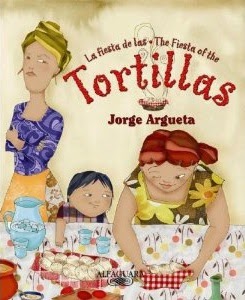
Review: Jorge Argueta's La Fiesta de las Tortillas

Teachers!  Parents!  Do you want to make read-alouds as educational and informative as possible for your kids?  I'm starting a series of book reviews in which I provide tips for using diverse picture books in the classroom (or at home).  I hope you enjoy them!

Title: La Fiesta de las Tortillas / The Fiesta of the Tortillas
Author: Jorge Argueta (El Salvador)
Illustrator: María Jesús Álvarez (Argentina)
Translators: Joe Hayes & Sharon Franco
Publisher: Alfaguara
Age range: 5+


Who doesn’t love food and a good mystery?  In La Fiesta de las Tortillas / The fiesta of the tortillas, USBBY and Américas Book Award winner Jorge Argueta draws from his childhood experiences to serve up a charming, semi-autobiographical “story full of magic and flavor” (p. 2).  Koki’s family owns a restaurant in rural El Salvador, and each day his aunts and cousins make fresh tortillas for their customers.  One night Koki’s Aunt Toya hears a rhythmic clapping – the sound of someone cheerfully preparing tortillas – coming from the empty kitchen.  

The next day, she asks her sister Rosa about the clapping, and Rosa confirms that she has also heard the mysterious noise.  Each night, the rhythm awakes a different family member who stumbles into the kitchen only to find it dark and empty.  After days of confusion and concern, the women finally realize that the Spirit of Corn has been visiting them.  They embrace the cheerfulness and warmth of the Spirit and get to work together, singing a tortilla-making song they enjoyed when they were younger. 

This side-by-side bilingual text is an excellent support for emergent bilingual children.  Argueta tells his story with delicious, descriptive Spanish imagery, blending rich figurative language, preterit and imperfect verb tenses, and a large helping of food vocabulary (loroco, pimiento, masa, tamales, huevos, frijoles).  A native of El Salvador, Argueta also introduces readers to Salvadoran and Central American vocabulary, like comedor (restaurant), pizcucha (kite), resortera (slingshot), and pupusa (stuffed tortillas).  


Since the language is complex, Joe Hayes’ and Sharon Franco’s English translation below the Spanish text can help young Spanish learners find their way through difficult passages.  María Jesús Álvarez’ intricate illustrations – a combination of earth-toned watercolor and photographic collage that pops with bright blues, reds, and yellows – also reflect and reinforce the text, providing readers with an excellent visual aid.


This book is also replete with cultural information that provides children with an engaging introduction to learning about the Pipil Nahua people, the indigenous group to which Argueta belongs.  Because of the relative absence of indigenous American voices in media and public discourse, many non-indigenous children are unaware that native peoples are still around today, much less that some people of indigenous heritage, like Argueta, still participate in their communities’ traditional beliefs and cultural practices (as evidenced by the Spirit of Corn in this book).  Therefore, La Fiesta de las Tortillas can ease children into a deeper knowledge about the presence of indigenous people in Central America, particularly the Pipil Nahua in El Salvador.  Please see the following links for additional resources:

Interview with Jorge Argueta (Spanish)

Interview with Jorge Argueta (English)

Additional information on Pipil Nahua history, culture, and current events

List of Jorge Argueta's books on Goodreads

Tuesday, August 26, 2014

KidLit in Puerto Rico: Part Two

Picking up where I left off last time.

So I went to Puerto Rico and found quite a few interesting children's books.  In my last post, I discussed anti-bias/anti-racism textbooks and collections of poetry, so now I'm going to bring it on home by exploring some of the nonfiction(ish) literature I came across.

The first book is Everywhere Coquís / En Dondequiera Coquíes (Hooper, 2007), which can be found in many, many Puerto Rican gift shops and caught my eye because of its appealing construction -- you can read the book in Spanish and then turn it over and flip it upside down to read it in English.


I've categorized this book as nonfiction, but that's only partially true, since the overall plot of the book is fictional, while many of the details present factual cultural information about Puerto Rico.  In this story, a group of coquís -- tiny but vocal frogs that are widely beloved in PR -- are chased out of the rainforest by parrots and wander through the countryside and into the city, where they encounter several well-known sights, like a piraguas (snowcone) vendor, artists who craft vejigantes (traditional masks) and santos, and musicians playing traditional music.


La Mano Poderosa (All Powerful Hand)
and Los Reyes Magos (Three Kings)

Honestly, this book disappointed me for a couple of reasons.  First, I thought it would be a purely nonfiction, scientific presentation of coquís: their history, anatomy, habitat, etc.  Second, I'm concerned about the "tourist" nature of the text.  While the aspects of Puerto Rican culture depicted in the book -- food, art, music -- are definitely important and worth learning about, they don't cover the many and complex ways of being Puerto Rican.  Therefore, this book can be a sweet, charming way to introduce children to the island and some of its cultural practices, but reading other books is necessary to prevent kids from possibly developing a narrow, stereotyped view of Puerto Rico.

Next I have to discuss the vast amount of information on the Taínos (the indigenous people living in Puerto Rico when the Spanish arrived) that I encountered during my trip -- nearly every museum and gift shop sold Taíno artifact replicas and books.  Since many of us living in the US aren't familiar with Taíno history, here's a very brief overview (source):

  • The Taíno people lived in Puerto Rico, Cuba, Hispaniola, Jamaica, and many other areas of the Caribbean.  Their ancestors probably first arrived in this areas around 400 B.C.
  • They first encountered Europeans (led by Columbus) in 1492.
  • By the 1530s, most Taíno people had died due to warfare, disease, and slavery brought by the Europeans.  Also, many indigenous women married Spanish men.
  • Although (probably) no one in the Caribbean has 100% indigenous ancestry, there are many people who identify as Taíno and keep Taíno cultural practices alive.
...Which brings me to two children's books dealing with indigenous topics.  First up is Tai: El Pequeño Tayno / Tai: The Little Taíno (Otero, 1972/2007), the first in a series of historical fiction texts about a little boy going about his business in pre-conquest Puerto Rico.


In this story, Tai eats breakfast, takes a bath, helps his family with chores, watches artisans creating ceramic wares, says hello to the local leader, and helps fisherman unload their fresh catch from their canoes.  Clearly, this book's creators want to teach children about various aspects of Taíno life in the past, including daily work, recreation, clothing, vocabulary, etc.  Everything about this book seems aboveboard -- the language is respectful, and the illustrations look accurate.  However, I'm definitely no expert in Taíno culture, so I'd be interested to hear what a more knowledgeable reader might have to say about this text.


Overall, reading this book left me with several questions about how the Taínos are perceived in Puerto Rico today.  How many people identify as Taíno?  How are these people viewed and treated by the government and other Puerto Rican residents?  What and how do children learn about Taínos and the Spanish invasion in school?  Lots of interesting topics to investigate.

Finally, I present to you De Cómo Nació El Amor / How Love Was Born (Álvarez Astacio, 2010), a book that I want to love but just can't.


It's another book that tries to pay homage to indigenous peoples, but, sadly, it just doesn't work.  Here's an excerpt from the introduction:

"This book is a myth about the origin of love; that very love for life that we feel in the depths of our heart.  The mythical space, created by the illustrations in this book, is based on the picturesque depictions from various indigenous groups around the world; those that once existed and those that are still in existence today."

Two sets of questions: First, where did this myth come from?  Is it a story that comes from a specific group of people, or is it yet another made-up story that seems nice because it "sounds Indian"?  If this tale does come from a specific group of people, why are those people not named in this book?

Second, why take a bunch of different indigenous art styles and mash them together?  Is the illustrator homogenizing indigenous cultures, implying that they're all more or less the same?  Because of these problematic elements, it would be best to use this book to teach kids critical reading skills but not to teach them about indigenous peoples.

To wrap up, I'd like to recommend exploring local children's literature offerings when you go on trips, either here in the US or abroad.  Doing so can really enrich your experience by teaching you more about your surroundings or by giving you something to ponder as you travel.  I hope you're having a great week, and I'll see you next time!

Sunday, August 17, 2014

KidLit in Puerto Rico: Part One

Well, I’m back from my trip to Puerto Rico, and I’m so grateful for the opportunity to visit such a culturally rich and beautiful place.  After spending some time in Vieques, I was able to travel to El Yunque Forest – the only tropical rain forest in the US National Forest System – and Old San Juan.

El Yunque was breathtaking and unlike anything I’d ever seen before…

View from the Mt. Britton tower 

Los Picachos 

World's cutest tiny waterfall

But I’m a sucker for cities and LOVED San Juan.  Wandering through the Museo de las Américas, peering into the grand old churches, and sipping coffee were especially enjoyable.  (The coconut latte at Don Ruiz = very yes.)

Calle San José 

El Morro fortress 

Catedral San Juan Bautista 

La Virgen de Monserrate @ El Museo de las Américas

And because I’m me, of course I kept my eyes open for children’s literature and other types of multicultural educational texts along the way.  I was extremely curious about what I’d find, since I’m familiar with plenty of Puerto-Rican-American kidlit (such as works by Judith Ortiz Cofer, Carmen Bernier-GrandEsmeralda Santiago, and Lulu Delacre), but, aside from the civic action comics I found in Vieques, I’ve never encountered any children’s books from Puerto Rico.

Fortunately, I wasn’t disappointed.  While the books I found certainly aren’t representative of all Puerto Rican children’s literature, I stumbled upon some very interesting titles in museum shops and independent bookstores. 

First up are two textbooks that I encountered in several stores.  Arrancando Mitos de Raíz (Uprooting Myths of Race) is an instructional text for teachers that focuses on dispelling racial myths and stereotypes about Puerto Rican people of African descent. 


Alongside this work was a textbook for students about Puerto Rico's African heritage called La Herencia Africana.


I loved seeing these books, since evidence of African cultural practices is very strong on the island, and so many Puerto Rican people have African ancestry.  Also, sadly, people of color face a lot of discrimination in PR, just as they do in the rest of the United States and other parts of the world.  However, I'm left wondering how popular these textbooks are in Puerto Rican schools and teacher preparation programs.  How widespread are anti-racist educational programs on the island?

Next, we have some poetry.  La Rosa Va Caminando (The Rose Goes Walking) is a collection of poems written by a young girl, Elsa Tió, between the ages of five and nine.  Still an active writer today, Elsa was a literary prodigy who crafted poems about subjects like nature, family, and love, and Sofía Sáez Matos has sumptuously illustrated Tió's verses with painted collages reminiscent of Eric Carle's work.


At Librería La Tertulia, a small store packed with some wonderful books in both Spanish and English, I came across another compilation of poetry for children -- Poemas con Sol y Son (Poems with Sun and Sound).  


This volume features poems from all over Latin America, and Puerto Rico is represented by six poets.  My personal favorite is by José Antonio Dávila:

La luna más que redonda
hoy está llena.
Tiene la cara hinchada
como el que tiene
dolor de muelas.

(The moon is more than round -- 
tonight it's full.
It has a swollen face
like someone who has
a toothache.)

:D

Well, I think I'm going to make this post a two-parter, so STAY TUNED for more Puerto Rican children's literature -- next time, I'll focus on non-fiction.  I hope everyone is having a wonderful start to the new school year!  (And if you're not a teacher, parent, or student... Happy Mid-August!)