Showing posts with label international. Show all posts

Tuesday, September 15, 2015

Kidlit in Canada: Part Two

And then we went to Quebec and spent most of our time in Quebec City, the capital of the province.

And home of this lovely church-turned-library.

On the old city's main drag lay the sweetest little bookstore, Librarie Pantoute, where I was reminded that Francophones are the monarchs of graphica.  Seriously, a third of the store was filled with comics and graphic novels for all ages.  They had the Smurfs.  They had Asterix.  They even had Mafalda translated into French.


Unfortunately, they also had one of the more racist Tintin books.


What really caught my eye, though, was the series of graphic biographies about famous historical figures.  If I could actually read French, I'd be all over them.


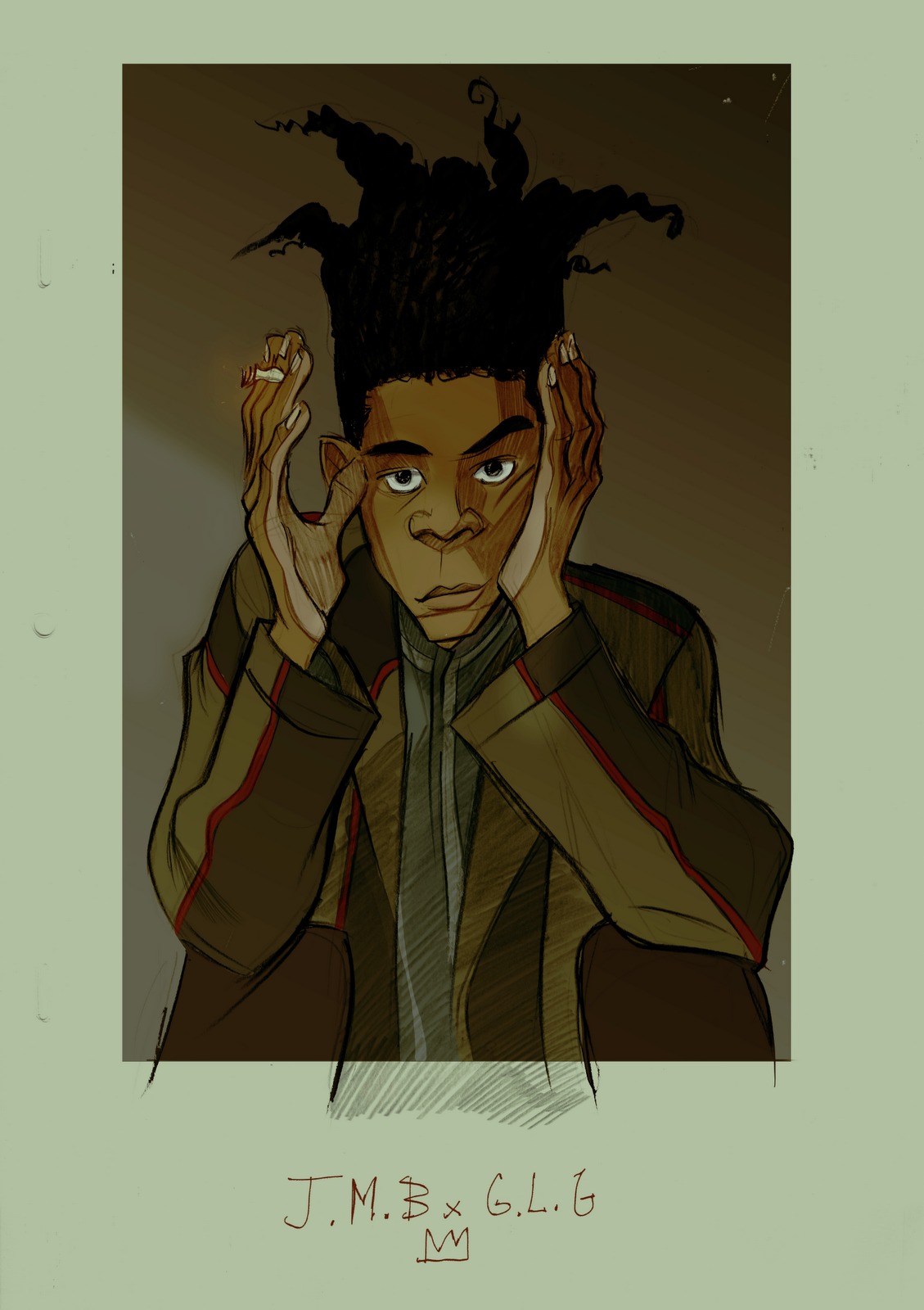
I was also excited to see lots of Guy Delisle's work.  Although I knew he was a French speaker, I didn't realize that he's from Quebec City, so I saw his stuff all over town.  His books -- Shenzen, Pyongyang: A Journey in North Korea, Burma Chronicles, and Jerusalem, all already translated into English -- chronicle his worldwide travels as an animator and are more suited for older students and adults.  While I love his drawing style, he's been accused of being an Orientalist, so his work might be a great springboard for critical discussion in a high school or college classroom.

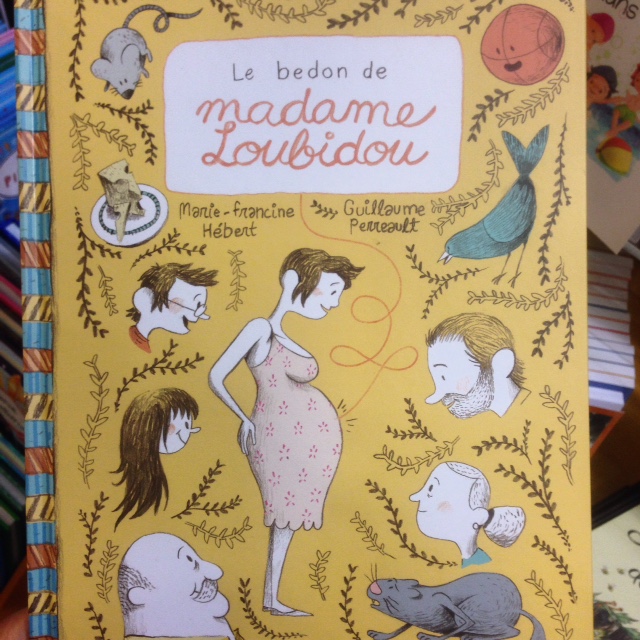
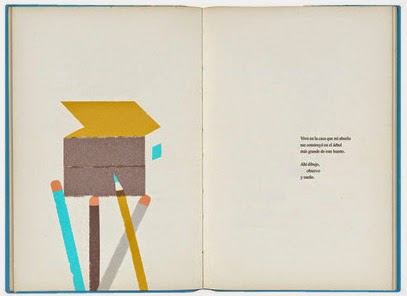
I wish I had more to say about the kidlit situation that I observed, but my lack of language skills prevented me from really exploring the content of the books I found.  So I'll leave you with a few photos of some beautiful picturebooks that grabbed my eye.  If you're a Francophone parent or teacher, maybe you'll enjoy one of these :)


Saturday, September 5, 2015

Kidlit in Canada: Part One

First of all, I want to apologize for my sparse posting.  Summer was busy, and my work duties are changing, leaving me with less time to write here.  I'd love to keep up my weekly posting schedule, but things may not work out that way; we'll see how the semester progresses.  Thanks for sticking with me :D

Now onto the Great White North!  So I went to Canada at the beginning of August, and it was the best.  THE BEST.  My husband and I spent a little bit of time in Toronto, then took the train over to Montreal, and finally settled in Quebec City for a few days.  I'm so grateful that I finally got to visit our northern neighbor, and I can't wait to go back and explore some different areas.

And reunite with my favorite candy in the whole wide world.

While in Toronto (home of Groundwood Books, one of my favorite publishers), I was slightly bummed because the city's children's bookstores all seemed to be out of reach.  My husband and I like to rely on public transit and walking when we travel, so we had to stay downtown -- not a big deal, of course, but no children's bookstores for me.  Therefore, I was quite pleasantly surprised when I found an excellent cache of picture books at the Museum of Inuit Art down by the harbor.


What a cool museum, and very accessible for someone like me, a Texan who isn't very familiar with Inuit art.  When you enter, you can take a quiz to determine which "style" of sculpture you like best (minimalist, naturalist, grotesque, etc.), and then most of the pieces are labeled with those style types.  This approach made the exhibitions very relevant and helped me think more deeply about my aesthetic responses to the artworks.

(I especially like the minimalist style, btw.)

Plus, there were plenty of engaging activities for kids (and adult-sized kids), from scavenger hunts to coloring pages to an animated short film version of a traditional story called "The Blind Boy and the Loon."

And the gift shop!  That's where I discovered the picture books and found myself immediately taken in by a book called Sweetest Kulu, written by Inuit-Canadian singer Celina Kalluk and illustrated by Alexandria Neonakis.  It's a precious lullaby filled with beautiful images of a baby interacting with various Arctic animals.  The perfect bedtime read.  (They also had a print version of "The Blind Boy and the Loon.")


Sweetest Kulu's publisher, Inhabit Media, is something to behold.  From their mission statement:

"We are an Inuit-owned publishing company, with our head office located in Iqaluit, Nunavut. To our knowledge we are the only independent publishing company located in the Canadian Arctic. Our aim is to preserve and promote the stories, knowledge and talent of Inuit and northern Canada.

"Since 2006, Inhabit Media has been working to encourage Inuit and non-Inuit Arctic residents to share their stories and their knowledge, and to record the oral history of our home. One of our aims is to ensure that Arctic voices are heard and that they have the opportunity to contribute to Canadian literature. Since our inception, Inhabit Media has been working with elders and storytellers to ensure that the rich story-telling culture of the Inuit is preserved and passed on. As well, we have been working with elders, hunters, and knowledgeable residence to ensure that the rich traditional knowledge about the environment is not lost.

"As well, Inhabit Media works with Inuit organizations, non-profit societies and the Government of Nunavut to ensure that the Inuit language is preserved and strengthened. Almost every book Inhabit Media publishes is also available in Inuktitut or Inuinnaqtun. Our authors, storytellers and artists bring these stories and knowledge to life in a way that is accessible to readers in both North and the South."

Something worth supporting.  I encourage you to visit their website and browse their books -- they have some great selection, from contemporary realistic fiction to traditional strories to informational texts.


Well, that's it for now.  In my next post, I'll cover my Quebecois adventures, the abundance of comics/graphica I found, and my frustration with my lack of French language skills.  Hope you have a wonderful week!

Friday, June 5, 2015

Gyimah Gariba: Illustrator of the Week

This week's illustrator is Gyimah Gariba, who grew up in Ghana and currently lives and works in Toronto.  Instead of writing a description, I'll let him speak for himself: 


To my eye, his style looks like comics + mural art + watercolor = a really fresh and interesting blend that's different from anything else out there.  If you'd like to keep track of his daily doings, he has great Instagram and Tumblr accounts where he posts his art frequently.  In the meantime, here are some of his pieces:


 "Ghana" (video)


Mr. Gariba is also an animator.  Until recently, he worked on the Adult Swim show, Black Dynamite, and now he's apparently developing a slightly mysterious animation project called Anansi.  I haven't been able to find much information about it, but here are some character shots from his website:
 
 
I'm intrigued!  But here's the thing -- as far as I can tell, Mr. Gariba has never illustrated children's books.  I would love to see his style in the pages of a picture book, so, if he's interested in that kind of work, we might see some of that in the future.  Here's hoping!

Monday, May 18, 2015

Zineb Benjelloun: Illustrator of the Week

This week's illustrator is Zineb Benjelloun!  Ms. Benjelloun hails from Morocco, attended university in France, and currently lives in Casablanca.  According to an interview with OkayAfrica, inspiration comes from the world around her and is influenced by her work in television and documentary film-making.  Another major influence is her desire to explore her Moroccan identity and to depict real Moroccan people as diverse individuals "in the international visual landscape" (as cited in Sefa-Boakye, 2015) -- an important task considering the stereotyped, essentialized representations of Moroccans (and Africans in general) floating around in illustrations and texts created by outsiders. 

Here are a few examples of her work from her website:


I love how she uses seemingly simple line work to create extraordinarily complex visions.  There's something so appealing about the geometry of her pieces -- whether she uses color or keeps things black-and-white, her images grab the eye and hold it.

Also, Ms. Benjelloun has created art several online books for children for a website called eMadrassa.  These books feature animated illustrations, sound effects, and text that changes color as the words are read aloud by an audio reader -- very cool!  The only catch is that the books are in French, but don't let that stop you from checking them out.  And if you know any children who speak French or are learning, then these books can be a very helpful resource, not only for their language development, but also for learning about culture, history, science, and more:

Sauvons notre patrimoine (children learn about remembering Moroccan history and culture by preserving architecture)

Des animaux pas bêtes (a class learns about animals and conservation during a trip to the zoo)

Mille et une répliques (a group of friends puts on a play of 1001 Arabian Nights)

I can't wait to see where Ms. Benjelloun's art takes her -- I hope she keeps illustrating children's books!

Tuesday, May 12, 2015

Manuel Monroy: Illustrator of the Week

This week's illustrator is Manuel Monroy!  Mr. Monroy received his degree in graphic design from la Universidad Autónoma Metrpolitana in Mexico City and has created art for children's books, magazines, advertisements, and animations for the past twenty years.  During that time, he's also won multiple awards and has shown his work in exhibits around the world.  Here's a sampling of his artwork from his website:


His images are all about balance -- they're soft yet expressive and combine earth tones with pops of bright color.  Also, they're just so dang cute, soothing, daydream-y, and perfect for picture books.  If you'd like to add some of his illustrations to your home or classroom library, hit the links below:

What Are You Doing? (Elisa Amado, also available in Spanish)

Why Are You Doing That? (Elisa Amado, also available in Spanish)

Be a Baby (Sarah Withrow, also available in Spanish)

Rooster/Gallo (Jorge Lujan)

Daybreak, Nightfall (Jorge Lujan, also available in Spanish)

When I Was a Boy, Neruda Called Me Policarpo (Poli Delano, also available in Spanish)

Un pueblo lleno de bestias (Francisco Hinojosa)

¿Quién pasó por aquí? (Martha Duhne)

Happy reading!

Tuesday, February 10, 2015

Review: Ka'ya ta kutu'a kun Ñuu Savi

Title: Ka'ya ta kutu'a kun Ñuu Savi / Adivinanzas en mixteco, la lengua de la lluvia / Mixtec Riddles
Compiled by: Alejandra Cruz Ortiz
Illustrator: Octavio Moctezuma Vega
Publisher: Artes de México
Age Range: 4+

You might have noticed that bilingual books are (thankfully) somewhat easier to find these days, but have you ever seen a quintilingual book?  Well, guess what I found in Mexico.

Oh yes.

This colorful book of riddles offers readers brainteasers in five languages -- three varieties of Mixtec, Castilian Spanish, Catalan, and English.  For those of you who, like me, aren't super familiar with Mixtec, here's brief introduction from mixtec.org:
"Mixtec belongs to the Otomanguean group of Mesoamerican languages.  Proto-Otomanguean, the mother language, was spoken by hunters and gatherers in the region over 10,000 years ago.  A forerunner of contemporary Mixtec appeared some 7,000 years ago.
"It is misleading to talk about Mixtec language as a single, uniform system of oral and written communication.  By some estimates, there are thirty or even fifty variations of the language, some of which are very different from one another.  Residents of settlements separated by a few miles may only understand about 10-25% of what each other says [....]
"In the 500+ years since the arrival of Cortés, Mixtec has adopted or adapted Spanish words for which there are no Mixtec equivalents.  And today, because of the heavy migration between Oaxaca and the United States, Anglicisms are increasingly creeping into the language.  A startling, but no longer uncommon scenario in schools in the Mixteca [region were Mixtec is commonly spoken] is the following: A Spanish-only speaking teacher, educated in Mexico City, leads a classroom comprised of Mixtec-only speaking students, bilingual Mixtec-Spanish speakers, and bilingual Mixtec-English speakers."

Areas of Mexico where Mixtec languages are spoken

This passage illustrates how rich and complex languages are in Mexico.  With so many linguistic traditions coming together and mingling, it seems wise to create books like this one that recognize and utilize several of them together.  Also, I love how the book honors the Mixtec varieties -- which, sadly, some people view as useless or inferior -- by placing them first on the page instead of below Spanish or English, two more dominant, privileged languages.

Would you like a preview?  Here's a riddle:

Pinotepa, Oaxaca
Yu'u chavixi kuui vati chike nuu ndi'i ita
Chakan ñi ña'an kuniñi ko'oñi ñuñuyu
Ri saa ndio'o.

Xalpatláhuac, Guerrero
Visi ni vaku il chi
Xika ni'i nuu ita
Soo ndi'i na si'i ndiki na ko'o na ñuñu ii
Miñaa nada yo ku ii kuka'ndo.

Huajuapan, Oaxaca
Yu'u kuu iin ña v idji chii xikanuui tanuu,
tanuú ita ta ndi'i ña'a kutondodjo ñuñui kunina.

Castellano
¿Ya sabes quién soy?
Chiquito de mil colores,
por el lugar de las nubes voy.
Del dulce de mil flores
me deleito con sus sabores.

Català
Petit ocell multicolor
Vaig per les flors tastant sabors.
No pots endevinar qui sóc?

English
Even though I'm small in size,
I have many colors to delight the eyes.
I like to spend hours and hours
Drinking sweetness from the flowers.

And the answer is...

Yoo kuu yu'u: Saa ndio'o
Saa ndio va ku ii
Ndiyoo kuui. Ndiyo'o
El colibrí
El colibrí
Hummingbird

Love it.  And just think of all the possibilities for using this book in your classroom or at home with your children.  You might discuss translation and issues of linguistic diversity and marginalization with older kids, or you might provide younger students with opportunities to write their own riddles in any language they want.

As for me, I'll be giving Ka'ya ta kutu'a kun Ñuu Savi to my friends who are raising their son to speak Catalan, Spanish, and English, because seriously -- how many North American-published books can you think of that include Catalan (another marginalized, persecuted language)?  If you'd like to snatch up a copy for yourself, you can order it directly from the publisher or buy it used through Amazon or Barnes & Noble.  Enjoy!

Monday, January 19, 2015

KidLit in Puebla

Hey everyone!  Well, I took a nice, long break from blogging, so I'm rested and ready to get back to all things children's literature.  I hope y'all enjoyed your holidays and are having a great start to the new year!

Earlier this month, I had the opportunity to travel to Puebla, Mexico, and... wow.  Seriously, if you're into traveling, put it on your list right now -- it's a beautiful, friendly place with way too much to do.  Here are some highlights:

Approximately one billion churches

Colonial buildings covered with Talavera tile

Mesoamerican ruins (and more churches) in nearby Cholula

A sweet old library

Slightly terrifying volcanoes

And bookstores!  Bookstores everywhere, from tiny spaces and stalls selling used novels to big, shiny stores filled with textbooks.  My favorite, however, was a non-profit organization called Profética: Casa de la Lectura (House of Literacy), which operates a store, library, and café.  (If you'd like more info, I Google-translated the Spanish Wikipedia article here.)

The store's children's section was perfect.


Over the past couple of years, I've done a lot of reading about Mexico's children's literature publishing industry, and I've learned that -- while there's been fantastic growth in the world of Mexican picture books -- translations of popular English-language titles and series (like Disney, Barbie, Dora the Explorer, Harry Potter) are still very popular.  Also, books in Mexico ain't cheap, so I wasn't quite sure how big the demand (and therefore the supply) would be.  So when I walked into Profética, I didn't know how many children's books they would have or what kinds of titles I would see.

Overall, there was a great balance.  Yes, I found Barbie lurking on the shelves...


...but I also found translations of more "serious" children's lit authors like Anthony Browne.


And best of all, there were TONS of books created by Mexican authors, illustrators, and publishers.  I was especially excited to see several titles from Ediciones El Naranjo, one of my favorite publishing houses based in Mexico City.


It's kind of a miracle that I walked out of Profética with only four books in tow.  I'd tell you what they are, but I'll be reviewing them in the coming weeks, so they'll have to remain a secret for now :)

If you're ever in Puebla, hit this place up!  Or if you'd like to shop at Profética but aren't planning to go to Puebla anytime soon, you're in luck -- they have an online store and ship outside of Mexico.  The website is completely in Spanish, though, so if you're not familiar with the language, you might have to rely on a dictionary, online translator, or Spanish-speaking friend.  But don't let that stop you.  If you're hunting for Spanish-language or bilingual books, please consider giving them your business and supporting a wonderful literacy non-profit.  Have fun!

Tuesday, December 9, 2014

Review: Manlio Argueta's Magic Dogs of the Volcanoes

Title: Magic Dogs of the Volcanoes / Los perros mágicos de los volcanes
Author: Manlio Argueta (El Salvador)
Illustrator: Elly Simmons (US)
Publisher: Children's Book Press
Ages: 4+


Imagine a picture book that can be a powerful, entertaining, and appealing educational tool for preschoolers and high schoolers alike.  Drawing from the folklore of his native El Salvador, renowned author and political activist Manlio Argueta delivers with Magic Dogs of the Volcanoes / Los perros mágicos de los volcanes.  In this book, Argueta introduces readers to cadejos, mythical Central American creatures with the looks of a wolf and the grace of a deer.  According to legend, cadejos live around volcanoes (who are their great-great-grandparents), eat the seeds of morning glory flowers, and protect the local people from harm.

Everyone loves the cadejos and their kindness, except for Don Tonio, a rich landowner, and his thirteen brothers, who employ – or overwork, rather – the townspeople.  These men believe that the cadejos’ care makes the people weak and lazy, so they call upon some “lead soldiers” to get rid of the kindly creatures.  Fortunately, the cadejos have the power of invisibility, which helps them evade the soldiers at first.  However, when the men begin killing the morning glories, the creatures’ only food source, the cadejos’ volcanic ancestors must come to the rescue.

This book has something to teach students of all ages.  Younger children will enjoy the magical story, experiencing the folklore of El Salvador, and learning how another culture values and respects the natural world.  They’ll also love Elly Simmons’ detailed, earth-toned pastel illustrations, which clearly convey the candejos’ friendly mischief and bring the massive volcanoes to life.

Meanwhile, Argueta’s tale is also perfect for older students interested in Latin American history and politics.  Written during the final years of the Salvadoran Civil War – during which oligarchs and the military oppressed and terrorized rural civilians – Magic Dogs of the Volcanoes / Los perros mágicos de los volcanes mirrors this turmoil with its portrayal of conflict between the elitist Don Tonio, his lead soldiers, and the townspeople who must rely on their (super)natural surroundings for help.

Moreover, the book’s side-by-side bilingual format makes it a helpful text for Spanish and English learners of any age.  Argueta’s inclusion of words unique to Central America, such as cadejo, cipote (child), and the local names for two volcanoes (Tecapa and Chaparrastique) gives the language a distinctly Salvadoran flavor. 


I’m so grateful that I stumbled across this multifaceted tale in my local public library, and I recommend that you run out and borrow or buy a copy – you won’t regret it.  Also, for more information on the author and teaching this book, check out the following links:  

Tuesday, November 18, 2014

Review: Amalia Astorga's Efraín of the Sonoran Desert

Title: Efraín of the Sonoran Desert
Authors: Amalia Astorga (Mexico), as told to Gary Paul Nabhan (US)
Illustrator: Janet K. Miller (US)
Publisher: Cinco Puntos Press
Age range: 6+


It's Native American Heritage Month, and while we we're hopefully considering Native American issues (both historical and contemporary) year-round, it's a good time to collectively focus on the diversity and contributions of indigenous Americans to within their communities and larger society.  (And by "Americans," I mean North and South Americans.)

Therefore, I'll be taking a look at a book I've been wanting to review for a long time -- Efraín of the Sonoran Desert.  This book tells of the Seri people (or Comcaac, as they call themselves) of northern Mexico and their relationship with endangered local lizards.  


In an introduction, famed ecologist Gary Paul Nabhan shares a story about a visit to a Comcaac town, where he notices that several species of endangered lizards are thriving around the people.  His curiosity leads him to ask a local woman, Amalia Astorga, what she knows about the animals.

At this point, Astorga assumes the role of narrator and tells the tale of her friendship with Efraín, a lizard she nurtured for seven years.  It becomes clear that the Comcaacs' care for local animals is helping them thrive while habitat destruction in other parts of the desert is endangering all kinds of wildlife.

Overall, I have mixed feelings about this book, but I'll start my review with what I like.  First, I like that Astorga shares her own story -- she's even listed as the author of the book.  Since the dominant culture so often silences the voices of indigenous people, it's wonderful to see that Astorga's voice is included here.  Her story matters.

Second, I like how this book privileges the Comcaac people's views on conservation.  In the Americas, our way of "doing science" is heavily influenced by European-style research and practice.  We tend to trust knowledge backed up by intricate instruments, the scientific method, and peer-reviewed studies -- not that there's anything wrong with that.  Meanwhile, however, we often dismiss indigenous knowledge, or the various ways that indigenous peoples, like the Comcaac, study and understand the natural world.


In other words, we've been socialized to trust the word of a college-trained ecologist like Gary Paul Nabhan -- an outsider who has spent relatively little time in the Sonoran desert over the word of a woman like Amalia Astorga -- who has spent her life interacting with the animals in her local environment.  Therefore, it's a relief to read Astorga's own words, to hear her ideas and understandings.

Lastly, I like how Nabhan describes how the Comcaac people are in charge of their lives and their contemporary situation without casting them as victims or noble savages.  Their population is small, and there are pressures to assimilate into "mainstream" Mexican society, but these people aren't doomed.  Instead, adults "are actively teaching their language and traditions to their children so that language loss will never occur in their homeland" (p. 28).  They're real people facing challenges and preserving their cultural practices in the real world.

But.

I find several aspects of this book problematic.  For instance, Astorga's story is sandwiched between several pages of introduction and epilogue from Nabhan.  Why does he have to frame her story?  Do we need a "real scientist" (i.e., someone holding degrees from US universities) to vouch for her?  Why can't we just focus on Astorga's viewpoints?  I'd really rather read her descriptions of her community in addition to her story about Efraín.

Also, I'm uncomfortable with the language Nabhan uses to describe the Comcaac.  First, he calls them "Seri" -- a name given to them by outsiders -- even though the local people prefer to call themselves "Comcaac."  Why not use their actual community name?  Then there's the phrase "endangered people" (pp. 4, 26).  Yes, I understand that he's quoting anthropologists, and yes, many indigenous people's traditional ways of living are under threat, but I just don't like that phrase.  In English, we so often use the word "endangered" to describe species of animals, so I'm not comfortable using that word to label humans.

Finally, I wish the publishers had invited a Comcaac artist to illustrate the book.  Janet K. Miller's illustrations are lovely, but I'd rather see art from the community.

Well, my response to this book is messy, but there it is.  What do you think?  Agree?  Disagree?  Let me know!

Monday, October 6, 2014

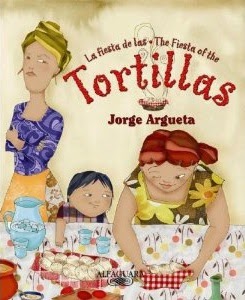
Review: Jorge Argueta's La Fiesta de las Tortillas

Teachers!  Parents!  Do you want to make read-alouds as educational and informative as possible for your kids?  I'm starting a series of book reviews in which I provide tips for using diverse picture books in the classroom (or at home).  I hope you enjoy them!

Title: La Fiesta de las Tortillas / The Fiesta of the Tortillas
Author: Jorge Argueta (El Salvador)
Illustrator: María Jesús Álvarez (Argentina)
Translators: Joe Hayes & Sharon Franco
Publisher: Alfaguara
Age range: 5+


Who doesn’t love food and a good mystery?  In La Fiesta de las Tortillas / The fiesta of the tortillas, USBBY and Américas Book Award winner Jorge Argueta draws from his childhood experiences to serve up a charming, semi-autobiographical “story full of magic and flavor” (p. 2).  Koki’s family owns a restaurant in rural El Salvador, and each day his aunts and cousins make fresh tortillas for their customers.  One night Koki’s Aunt Toya hears a rhythmic clapping – the sound of someone cheerfully preparing tortillas – coming from the empty kitchen.  

The next day, she asks her sister Rosa about the clapping, and Rosa confirms that she has also heard the mysterious noise.  Each night, the rhythm awakes a different family member who stumbles into the kitchen only to find it dark and empty.  After days of confusion and concern, the women finally realize that the Spirit of Corn has been visiting them.  They embrace the cheerfulness and warmth of the Spirit and get to work together, singing a tortilla-making song they enjoyed when they were younger. 

This side-by-side bilingual text is an excellent support for emergent bilingual children.  Argueta tells his story with delicious, descriptive Spanish imagery, blending rich figurative language, preterit and imperfect verb tenses, and a large helping of food vocabulary (loroco, pimiento, masa, tamales, huevos, frijoles).  A native of El Salvador, Argueta also introduces readers to Salvadoran and Central American vocabulary, like comedor (restaurant), pizcucha (kite), resortera (slingshot), and pupusa (stuffed tortillas).  


Since the language is complex, Joe Hayes’ and Sharon Franco’s English translation below the Spanish text can help young Spanish learners find their way through difficult passages.  María Jesús Álvarez’ intricate illustrations – a combination of earth-toned watercolor and photographic collage that pops with bright blues, reds, and yellows – also reflect and reinforce the text, providing readers with an excellent visual aid.


This book is also replete with cultural information that provides children with an engaging introduction to learning about the Pipil Nahua people, the indigenous group to which Argueta belongs.  Because of the relative absence of indigenous American voices in media and public discourse, many non-indigenous children are unaware that native peoples are still around today, much less that some people of indigenous heritage, like Argueta, still participate in their communities’ traditional beliefs and cultural practices (as evidenced by the Spirit of Corn in this book).  Therefore, La Fiesta de las Tortillas can ease children into a deeper knowledge about the presence of indigenous people in Central America, particularly the Pipil Nahua in El Salvador.  Please see the following links for additional resources:

Interview with Jorge Argueta (Spanish)

Interview with Jorge Argueta (English)

Additional information on Pipil Nahua history, culture, and current events

List of Jorge Argueta's books on Goodreads