Showing posts with label diversity. Show all posts

Tuesday, October 27, 2015

Time to Get Meta

Some brief musings:

Lately, I've been doing a lot of thinking about my motives for doing this blog.  How do I -- a White, middle-class person who has experienced life-long privilege -- have the authority to write about books written by authors and depicting characters with different backgrounds than me?  Am I engaging in de facto segregation by writing about diverse books and labeling them as "diverse" and "multicultural"?
Am I, as this tweet says, "othering inclusive books" by drawing attention to them?  I know that my intentions are good, but I also know that good intentions can be damaging if they perpetuate unquestioned privilege and continue to draw lines between "mainstream" and "other."

Just some questions I've been wrestling with.  What are your thoughts?

Friday, June 5, 2015

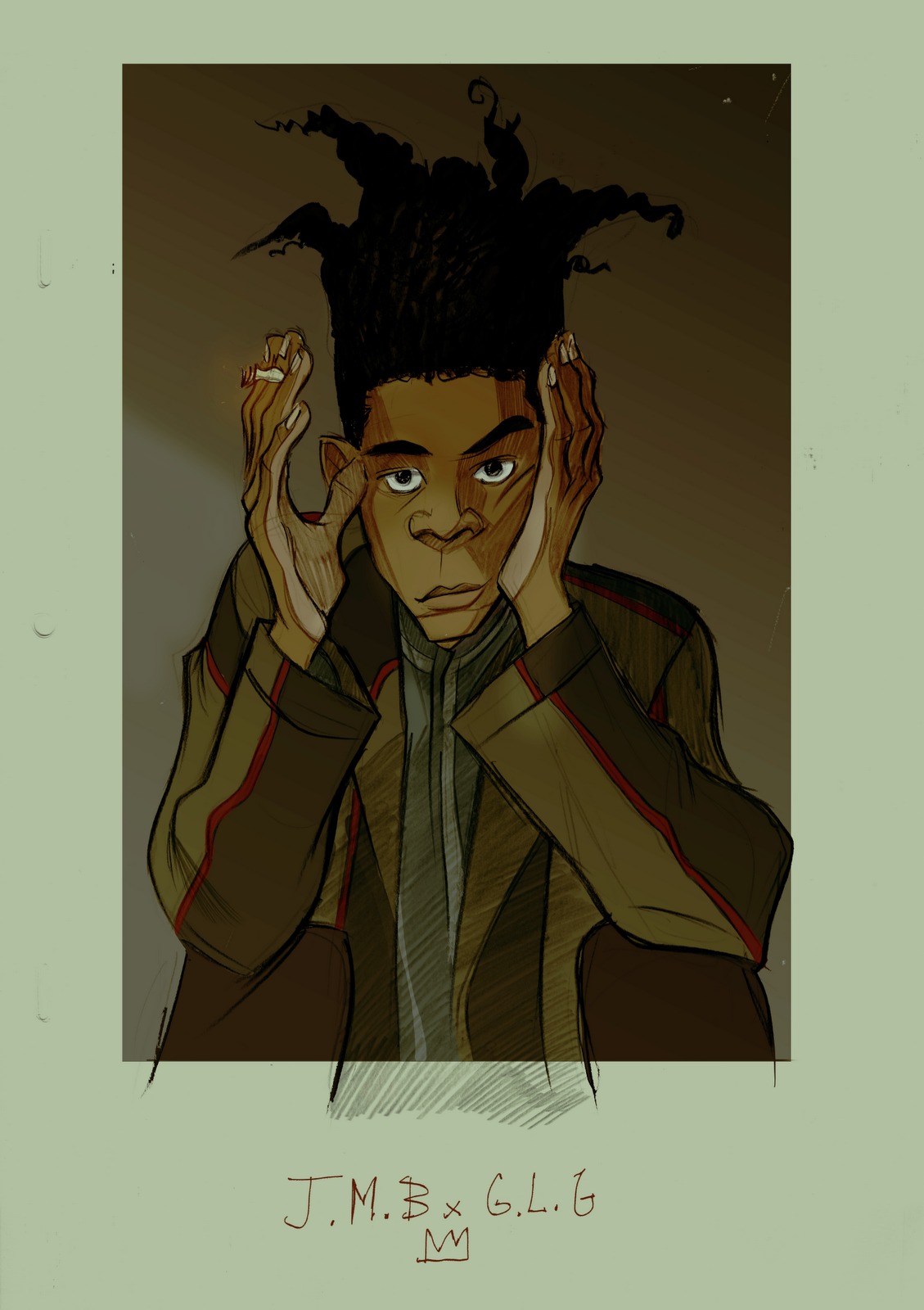
Gyimah Gariba: Illustrator of the Week

This week's illustrator is Gyimah Gariba, who grew up in Ghana and currently lives and works in Toronto.  Instead of writing a description, I'll let him speak for himself: 


To my eye, his style looks like comics + mural art + watercolor = a really fresh and interesting blend that's different from anything else out there.  If you'd like to keep track of his daily doings, he has great Instagram and Tumblr accounts where he posts his art frequently.  In the meantime, here are some of his pieces:


 "Ghana" (video)


Mr. Gariba is also an animator.  Until recently, he worked on the Adult Swim show, Black Dynamite, and now he's apparently developing a slightly mysterious animation project called Anansi.  I haven't been able to find much information about it, but here are some character shots from his website:
 
 
I'm intrigued!  But here's the thing -- as far as I can tell, Mr. Gariba has never illustrated children's books.  I would love to see his style in the pages of a picture book, so, if he's interested in that kind of work, we might see some of that in the future.  Here's hoping!

Monday, May 25, 2015

Jing Jing Tsong: Illustrator of the Week

This week's illustrator is Jing Jing Tsong!  Ms. Tsong lives in Hawaii with her husband, Mike Austin, who's also an illustrator.  According to their website, her artistic technique combines printmaking with digital illustration, and she focuses heavily on multicultural subject matter.  In addition to creating art for children's books, she also does some advertising and stock image work.

I love how she fills her crisp lines with so much color and pattern, making her images clean yet nuanced.  Plus, her style is SO CUTE:


If you're interested in taking a look at some of her books, I've compiled a list below.  The first four are board book written and illustrated by Ms. Tsong, and the following three are collaborations with other authors.  I'm particularly excited about Shanghai Sukkah, which is the story of a Jewish boy who escapes the Nazis and relocates to China with his family.  It releases in August 2015, so we don't have to wait too long for it!


Up in the Hawaiian Sky (Lavonne Leong)

A Bucket of Blessings (Kabir Sehgal & Surishtha Sehgal)

Shanghai Sukkah (Heidi Hyde)

Happy reading and art appreciating!

Monday, May 18, 2015

Zineb Benjelloun: Illustrator of the Week

This week's illustrator is Zineb Benjelloun!  Ms. Benjelloun hails from Morocco, attended university in France, and currently lives in Casablanca.  According to an interview with OkayAfrica, inspiration comes from the world around her and is influenced by her work in television and documentary film-making.  Another major influence is her desire to explore her Moroccan identity and to depict real Moroccan people as diverse individuals "in the international visual landscape" (as cited in Sefa-Boakye, 2015) -- an important task considering the stereotyped, essentialized representations of Moroccans (and Africans in general) floating around in illustrations and texts created by outsiders. 

Here are a few examples of her work from her website:


I love how she uses seemingly simple line work to create extraordinarily complex visions.  There's something so appealing about the geometry of her pieces -- whether she uses color or keeps things black-and-white, her images grab the eye and hold it.

Also, Ms. Benjelloun has created art several online books for children for a website called eMadrassa.  These books feature animated illustrations, sound effects, and text that changes color as the words are read aloud by an audio reader -- very cool!  The only catch is that the books are in French, but don't let that stop you from checking them out.  And if you know any children who speak French or are learning, then these books can be a very helpful resource, not only for their language development, but also for learning about culture, history, science, and more:

Sauvons notre patrimoine (children learn about remembering Moroccan history and culture by preserving architecture)

Des animaux pas bêtes (a class learns about animals and conservation during a trip to the zoo)

Mille et une répliques (a group of friends puts on a play of 1001 Arabian Nights)

I can't wait to see where Ms. Benjelloun's art takes her -- I hope she keeps illustrating children's books!

Tuesday, May 12, 2015

Manuel Monroy: Illustrator of the Week

This week's illustrator is Manuel Monroy!  Mr. Monroy received his degree in graphic design from la Universidad Autónoma Metrpolitana in Mexico City and has created art for children's books, magazines, advertisements, and animations for the past twenty years.  During that time, he's also won multiple awards and has shown his work in exhibits around the world.  Here's a sampling of his artwork from his website:


His images are all about balance -- they're soft yet expressive and combine earth tones with pops of bright color.  Also, they're just so dang cute, soothing, daydream-y, and perfect for picture books.  If you'd like to add some of his illustrations to your home or classroom library, hit the links below:

What Are You Doing? (Elisa Amado, also available in Spanish)

Why Are You Doing That? (Elisa Amado, also available in Spanish)

Be a Baby (Sarah Withrow, also available in Spanish)

Rooster/Gallo (Jorge Lujan)

Daybreak, Nightfall (Jorge Lujan, also available in Spanish)

When I Was a Boy, Neruda Called Me Policarpo (Poli Delano, also available in Spanish)

Un pueblo lleno de bestias (Francisco Hinojosa)

¿Quién pasó por aquí? (Martha Duhne)

Happy reading!

Sunday, May 10, 2015

Summer Break & Shouting Out Illustrators

Well, it's summer break (according to my school calendar), so I'm on vacation.  HA right, I'll be spending the next few months going to friends' weddings, going to my own wedding, taking a three-week intensive class, and reading for comps, meaning that I'll have to take a break from my (not really) strict blogging routine.

via quickmeme

However!  Since this blog is one of the ways I stay sane, I'll still post.  Instead of my usual fare, though, I'll be keeping things light and easy by posting "Illustrator of the Week" pieces.  Picture book art is one of my favorite things about children's literature, so I'm going to celebrate a different illustrator every week (or so) in order to introduce you to or remind you of great artists from diverse backgrounds.

I'll start this week with an illustrator from -- surprise surprise -- Mexico, so stay tuned!

Tuesday, April 21, 2015

KidLit in Chicago

I've been yearning to go to Chicago for years now, and I finally got my chance last week when I attended the American Educational Research Association (AERA) annual meeting.  The city did not disappoint!  (I didn't want to leave.  Can I go back now?)  When I wasn't doing conference stuff, I had several opportunities to get out and explore.  Here are some highlights:


Colonial-era painting of La Virgen de Cayma (Perú) @ the Art Institute of Chicago


This looks better than any of the pictures I took.

My favoritefavoritefavorite excursion, however, was visiting the Pilsen neighborhood and the National Museum of Mexican Art on the Lower West Side.  In addition to a beautiful permanent collection -- with everything from Mesoamerican sculpture to contemporary video art -- they have a few temporary exhibits, like the brand new collection inspired by Sandra Cisneros and her landmark novel, The House on Mango Street, which is set in Chicago.


I wish I could've taken pictures of the artwork because the collection included paintings by two of my favorite artists / children's book illustrators: Carmen Lomas Garza and Rafael López.  (Photography isn't allowed in temporary exhibitions at most museums, though.  Oh well.)  Fortunately, there was another Garza painting in the permanent collection, so I snapped a picture of that one:

Las posadas (2000)

Even better, the gift shop had a great selection of Latin@ and Latin American children's books, many of which I'd never seen or heard of before.  One book that really caught my attention was El gusto del mercado mexicano / A Taste of the Mexican Market by Nancy María Grande Tabor.


In this dual language book, Tabor -- who's from Loreto, Mexico -- guides readers through a traditional market, showing them popular Mexican foods and asking questions that reinforce math and science skills (e.g., "If we choose two of each [pastry], how many will we have?" and "Which of these ripe fruits are still green?").  I love this book, not only because of what it teaches, but also because of how Tabor presents the information.  Instead of presenting this Mexican cultural practice as exotic and strange to US readers (as many books about international cultures do, unfortunately), she depicts visiting a market as an interesting (but ordinary) practice that some people do.  Good stuff.

Another great book was Lotería by Patty Rodriguez, a dual language board book by a publisher called Lil' Libros.


Each page spread features a super-cute representation of a lotería card with Spanish and English captions.  Since there are lots of bilingual babies in my life, I bought a copy and was able to test it out on my friends' seven-month-old little dude as soon as I got back to Georgia on Saturday.  He focused intently on each page, laughed when I made Spanish and English rooster noises, waved his chubby little arms, and then shoved the book in his mouth when we finished reading.  So... SUCCESS.

Chicago is a beautiful stronghold of Latin@ (especially Mexican-American) culture, so if you get a chance to visit and are in the market for some great Latin@ children's literature and cultural experiences, they can hook you up.  I miss it already.

And now I leave you with the song that's been stuck in my head for a week:

Sunday, April 12, 2015

Book Talks at Latin@s in Kid Lit :D

I don't think I've mentioned it here yet, but the lovely folks at Latin@s in Kid Lit -- a group blog run by some amazing authors, illustrators, librarians, students, and teachers -- have invited me to contribute some book reviews for their "Libros Latinos" feature.  I'm so excited to join the team!  Last month, I wrote a review of Jorge Argueta's Talking with Mother Earth / Hablando con Madre Tierra, and I have another review coming out at the end of April.

 
Here are some hints about the book I'll be discussing:
  • It's a new release.
  • It's a picture book.
  • It's tasty.
  • The illustrations connect past and present.
Can you guess?  Hope to see you over at Latin@s in Kid Lit!

Tuesday, March 31, 2015

White Kids + Diverse Books

During my sophomore year in high school, I was required to read Hunger of Memory, Richard Rodriguez's autobiographical account of losing touch with his family's culture and language as he progressed in his education here in the US.  (For more info on this book, click here.)


I've always cared about diversity and creating a more loving world for people of all ethnic, linguistic, religious, and socioeconomic backgrounds in a broad and general way, but as a teenager, I was still very unaware of issues like White privilege, systemic racism, and the struggles that many people face on a daily basis due to inequity and prejudice in our society.  So when I began reading Rodriguez's book and found it somewhat boring*, I got frustrated and thought to myself: "Why do I have to read this book anyway?  I'm not Mexican."

That's when I needed someone to (not literally) slap me and say, "Because other people's experiences and perspectives matter, numnuts."  At that time in my life, even though I was somewhat aware of injustice in the world and wanted to care, I didn't see past my own small world.  I needed someone to help me look beyond myself by explicitly showing me how to read critically, to name and confront inequity, to cherish stories from people different than me, but no one did.  (Honestly, I can't blame my sophomore English teacher, because I know she was and still is an amazing educator who's very dedicated to diversity and equity -- I'm 99.99% sure that she didn't feel free to discuss these issues at length due to politics at my mostly White, very conservative school.)

Earlier this week, I came across a guest post by Taun M. Wright at the Lee & Low blog called "Why Do We Need Diverse Books at Non-Diverse Schools?" and it really hit home.  In this post, Wright lists the multiple reasons why it's important for kids from "dominant" sociocultural backgrounds to read diverse books, including decreases in prejudice and increases in academic performance.  All very true.  I needed diverse literature as a child/teenager, and I also needed adults to point out to me why reading diverse literature is crucial in our society.

I'm so grateful that graduate school has invited me to delve into topics concerning social justice, diversity, and multicultural education and children's literature -- my studies have enriched my life so much and have allowed me to see beyond myself, and I hope that my research can encourage others.  But what bugs me is that I didn't start exploring these topics in depth until graduate school.  Why not elementary school, or high school at the very latest?

This is why we need diverse books -- not only to read them, but to discuss them and get kids from all backgrounds thinking and acting.

*I've re-read Hunger of Memory since high school and, thankfully, don't think it's boring anymore :)

Monday, March 23, 2015

KidLit in Savannah

Have you ever been to Savannah?  It's a very cool, extremely fascinating city.  Last week was my first time down there, and I wish I could have stayed for two weeks instead of two days.  SO MUCH interesting history.

Mikve Israel, the third oldest
Jewish congregation in the US

First African Baptist Church, a stop in the Underground Railroad
and meeting place during the Civil Rights Movement

Haitian Memorial Monument, a tribute to the Haitian
soldiers who fought in the Battle of Savannah
during the American Revolution

Pretty square :)

Lots of interesting bookstores, too.  The first place I hit was E. Shaver, Bookseller, a small, independent store in the historic district.  


It had two rooms dedicated to books for young people -- one for picture books and another for chapter books and nonfiction.  Admittedly, I assumed that the selection would be pretty White and conservative (being in a city that gets a lot of White, conservative tourists), and I was pleasantly surprised to find many books by diverse authors and about diverse characters and topics.  While most of these books were more older, popular "classics," it was nice to see diversity on the shelves.  Here are some examples:

a gorgeous picture book about young Cassie's community

a super cute picture book about 
being brave with a cool grandma

BEEKLE!! (this year's Caldecott winner by Dan Santat)


 Farewell to Manzanar by Jeanne Wakatsuki Houston, 
an autobiographical novel about
Japanese-American internment during World War II

an exploration of racism and the Civil Rights Movement

two of my favorite banned books right next to each other!

A W.E.B. DuBois doll next to Ruth and the Green Book

Final verdict: Loved this store, although they could stock more new diverse books -- there are lots to choose from.  Bought Beekle for the nieces, although they might have to pry it out of my selfish fingers if they really want it :)

The next day, I visited the Book Lady, a used bookstore also located in the historic area, and found quite the little treasure: a signed copy of Heave Ho! by Savannah author and illustrator, José Lucio.


Heave Ho! is the story of a little worm who wants to crawl out of his hole and play in the sunshine, only to be grabbed by a bird.  Struggle and hijinks ensue.  It's an adorable, funny book for little kids, and the illustration style (photography + mixed media) is totally charming.  Buy yourself a copy and support a talented up-and-coming author/illustrator!

If you know of any other good bookstores in Savannah, let me know!  I'm always up for more literary tourism.

Tuesday, March 17, 2015

GCBA 2015!

Every year, UGA's College of Education hosts the Georgia Children's Book Awards and Conference on Children's Literature (or GCBA), an exciting, informative gathering that brings together authors, illustrators, teachers, librarians, and, happily, grad students.  In case you didn't know, I love smaller conferences because they provide great opportunities to spend time with friends, meet new people, enjoy interesting presentations and workshops, and just savor a nice weekend.


A lot happens at the conference, including the announcement of the year's award-winning picture book (grades K-4) and chapter book (grades 4-8).  Students and teachers around the state vote for their favorite books, and this year's picture book winner was Ol' Clip Clop: A Ghost Story, written by Patricia C. McKissak and illustrated by Eric Velasquez -- no big surprise, since lots of kids love spooky tales.  (I wish Niño Wrestles the World had won, but we can't have everything we want.)

The highlight of the conference for me, though, was meeting artist/author Shonto Begay and hearing him speak about his experiences growing up in Arizona, attending the Institute of American Indian Arts in Santa Fe, and creating sumptuous paintings that capture the desert, Navajo cultural practices, his family and neighbors, and the "harsh realities of modern reservation life."  His art is "about praying, about sending out a universe of prayer," he said, and each swirl of color is "the visual representation of a chant, the syllables of prayers."  And he can Etch-a-Sketch like no other.


Mr. Begay also discussed his time at a boarding school -- school officials literally kidnapped him while he was tending his family's sheep and took him to the "brutal institution," where government teachers attempted to "cleanse" children of their language, religion, and cultural identities.  While he didn't go into much detail about his "educational" experiences, Mr. Begay did emphasize that these schools left "a whole generation traumatized" and that his time there greatly influenced his work.  The tragedies of Indian boarding schools are so often ignored by history, so I'm grateful that he shared his memories.  We need to confront this past, even if it's painful.

Later that day, I found a treasure in the bookstore (because yes, this conference has a bookstore!) -- Navajo Long Walk, illustrated by Mr. Begay and written by Joseph Bruchac.  A counter-narrative to the glorified story of European-American westward expansion, this book privileges the Navajo perspective on the Long Walk, a 450-mile forced march from a reservation in Arizona to the Bosque Redondo in New Mexico.


I've been studying depictions of American Indians in nonfiction children's books and have observed that the telling of American Indian histories is dominated by White historians (Wilson, 1996).  Traditionally, it's been somewhat difficult to find histories written and/or told by Native people about their own tribes and nations.  Furthermore, books about American Indians written by non-Native authors are often filled with harmful stereotypes, biases, oversimplifications, and generalizations (Noll, 1995; Reese, 2007) -- either that, or authors romanticize Native people, minimizing their humanity by depicting them as magical, "relentlessly ecological," noble savages (Slapin, Seale, & Gonzales, 1996, p. 20; Stewart, 2000).  Navajo Long Walk, however, is a history created by two Native people and gives voice to people who have long been silenced while avoiding stereotypes.  Highly recommended.

If you're interested in exploring Shonto Begay's other children's books, take a look at this Goodreads list.  Have fun!

References

Noll, E. (1995). Accuracy and authenticity in American Indian children’s literature: The social      responsibility of authors and illustrators. The New Advocate, 8(1), 29-43.

Reese, D. (2007). Proceed with caution: Using Native American folktales in the classroom. Language Arts, 84(3), 245-256.


Slapin, B., Seale, D., & Gonzales, R. (1996). How to tell the difference: A guide for evaluating children’s books for anti-Indian bias. Sonoma, CA: Oyate.

Stewart, M. P. (2000). How can this be Cinderella if there is no glass slipper? Native American    “fairy tales.” Studies in American Indian Literature, 12(1), 3-19.


Wilson, A. C. (1996). American Indian history or non-Indian perceptions of American Indian       history? American Indian Quarterly, 20(1), 3-5.