Showing posts with label comics/graphica. Show all posts

Monday, September 28, 2015

Me + Comics 6Ever

Is there a certain genre of literature that doesn't really appeal to you?  You might try to enjoy that genre because lots of other people do, but it just doesn't feel right.  Maybe you feel like something's wrong with you because that genre seems so great, but for you, it's just... eh.

I have a confession: For me, that genre is superhero comics.  Several of my friends are really into Marvel and such, which I think is great -- they really enjoy that scene, and I'm happy for them.  But my attempts to enjoy superhero comics have been less than successful.

For example, I tried the new Ms. Marvel series and was impressed, but I didn't love it as much as I'd hoped to.  Kamala Khan is a great and complex character, the artwork is beautiful, and I appreciated exploring the cultural issues within the comics, but the series didn't touch me on a deeper level.

via Marvel

That's OK, though.  After trying Ms. Marvel, I decided to keep an open mind and listen to other suggestions from friends (and the kind and knowledgeable folks at my local bookshop).  That's how I found The Unbeatable Squirrel Girl.

via Marvel

SQUIRREL GIRL IS THE BEST.  What really drew me in is the series' laughs and lightheartedness.  Squirrel Girl (aka Doreen Green) has a quirky, absurdist, silly sense of humor that makes me feel good, and she doesn't take herself too seriously.  Plus, she's smart, creative, and empathetic, which makes her a great role model for young comic book fans.  These comics fit me perfectly.  I'm so glad I gave this series a try -- it showed me that there are comic books out there for everyone, even people who aren't huge superhero fans.

So let my experience be a lesson to all of you teacher and parents out there.  If a kid doesn't like a particular type of literature, it might just be because s/he hasn't found the right book yet.  So keep looking and encouraging your students/kids to try different genres and formats.

Also, ultimately, it's OK to not particularly like a genre, and kids need to know that as well.  In life, we're not going to like everything we read, and even if we love one poetry/graphica/nonfiction/etc. book doesn't mean we're going to like ALL poetry/graphica/nonfiction/etc.  But it's still good to expand your mind with different styles of literature, even if they don't rock your world.

TL;DR version: Keep reading!

Tuesday, September 15, 2015

Kidlit in Canada: Part Two

And then we went to Quebec and spent most of our time in Quebec City, the capital of the province.

And home of this lovely church-turned-library.

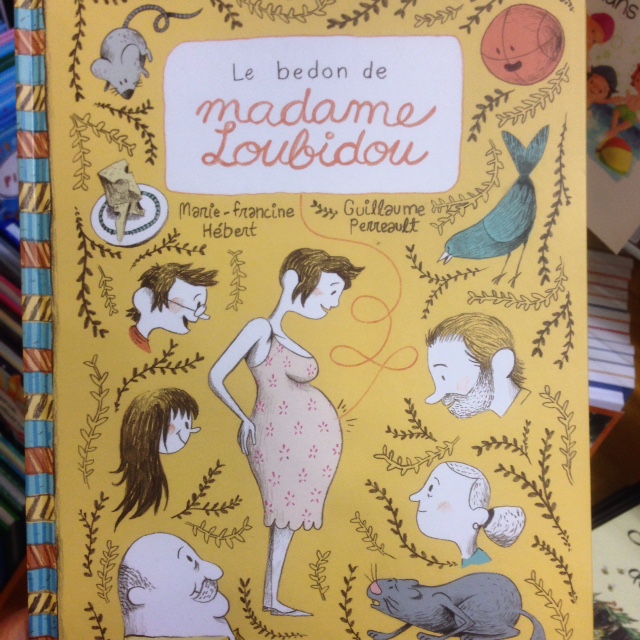
On the old city's main drag lay the sweetest little bookstore, Librarie Pantoute, where I was reminded that Francophones are the monarchs of graphica.  Seriously, a third of the store was filled with comics and graphic novels for all ages.  They had the Smurfs.  They had Asterix.  They even had Mafalda translated into French.


Unfortunately, they also had one of the more racist Tintin books.


What really caught my eye, though, was the series of graphic biographies about famous historical figures.  If I could actually read French, I'd be all over them.


I was also excited to see lots of Guy Delisle's work.  Although I knew he was a French speaker, I didn't realize that he's from Quebec City, so I saw his stuff all over town.  His books -- Shenzen, Pyongyang: A Journey in North Korea, Burma Chronicles, and Jerusalem, all already translated into English -- chronicle his worldwide travels as an animator and are more suited for older students and adults.  While I love his drawing style, he's been accused of being an Orientalist, so his work might be a great springboard for critical discussion in a high school or college classroom.

I wish I had more to say about the kidlit situation that I observed, but my lack of language skills prevented me from really exploring the content of the books I found.  So I'll leave you with a few photos of some beautiful picturebooks that grabbed my eye.  If you're a Francophone parent or teacher, maybe you'll enjoy one of these :)


Monday, July 27, 2015

Holy Moly, A Publication

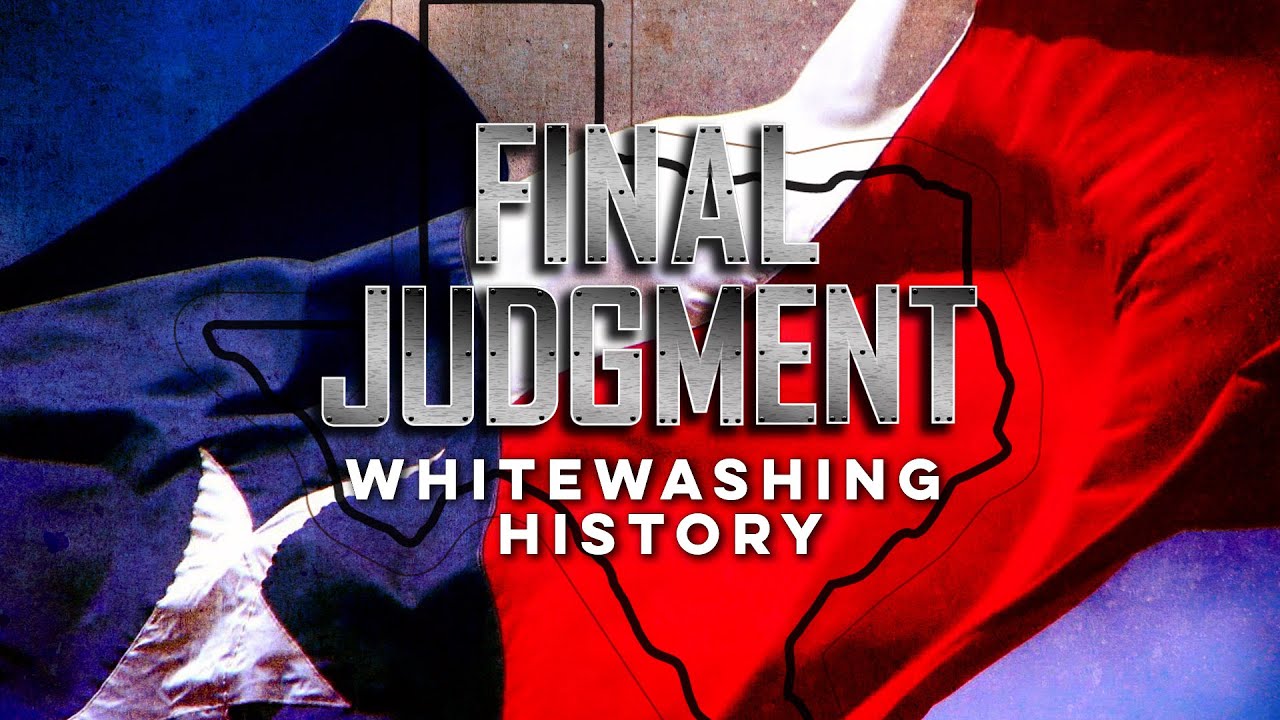
After a lot of hard work, I'm so happy to announce that my first "real" published article is out!  In spring 2014, one of my professors encouraged me to write a paper critically analyzing four graphic history books about the Battle of the Alamo, and it's one of the most fulfilling, interesting academic journeys I've ever taken.

While writing this paper, I was able to travel back to my childhood and relive wonderful memories of visiting San Antonio and learning about my home state's history.  However, I also had to confront the fact that the "official" (i.e., popular and dominant) story of the Alamo is pretty biased, inaccurate, and sometimes flat-out racist.

dramatic picture via The Young Turks

After the paper was finished, my friend and co-author, Margaret Robbins, provided some helpful input (many thanks, Margaret!), and we sent it off to Social Studies Research & Practice.  If you'd like to read the article, you can find it here.  It's an open-access online journal, so you'll be able to read the whole thing and/or download it for free.

I hope you enjoy it!

Tuesday, July 21, 2015

Challenging Racism with Graphic Novels

Now, more than ever, we need to talk about racism.

 via Race Report 

Yes, Confederate flags are coming down.  They needed to come down years and years and years ago.  But now that the flags are gone from government buildings in South Carolina, The Dukes of Hazzard has been pulled from the airwaves, and musicians are removing Confederate symbols from their shows, I bet there are more than a few people out there who are thinking, "Good job, problem solved, don't need to think about this anymore."  Once all of this "dies down" (i.e., major media networks stop covering the flag, police violence, etc.), many will be happy to forget about racism or think that our problems are solved.  Meanwhile, there are those who insist on minimizing racism, explaining it away, or flat-out denying that it exists.

Racism is still out there, pervading every aspect of our society.  Getting rid of Confederate symbols in public spaces is a step in the right direction, but one potential downside to banning them everywhere is that we might inadvertently silence dialog about why Confederate symbols are oppressive in the first place and potentially foster a belief that getting rid of hateful symbols erases racism.  No, racism is an institution, grounded in history, that goes far beyond symbols.  As educators, parents, and friends, we need to talk about it with young people and among ourselves.

via WUSF

That's where books come in.

A helpful way to understand racism and its current persistence in our society is to read histories that trace the journeys of ethnic groups through our nation's past and into the present.  Engaging with these books can show readers how, for example, slavery might be over, but the effects of slavery are still very much with us today in the forms of White privilege and systemic discrimination against Black people.  As Crowley & Smith (2015) pointed out, people need to understand racism through a "knowledge of history and an appreciation for structural inequity along racial lines" (p. 172).

The books that I'm about to recommend can be useful in high school classrooms or for adults who are interested in exploring the history of racism and discrimination in the US more thoroughly.  I believe doing so is extremely important because these issues are often glossed over or completely omitted from traditional histories and other reading materials that many of us encountered in school and that students are still reading today.  Also, I chose graphic novels because they're accessible, visual, and incredibly engaging to read -- a great break from textbooks.

First is Still I Rise: A Graphic History of African Americans (Laird & Laird, 1997/2009), an overview of Black history that I just finished.


I love this book because it provides tons of information left out of history textbooks, such as a closer look at the beginnings of slavery, Reconstruction, and the beginnings of the Civil Rights movement.  Still I Rise presents readers with a fantastic amount of balance, exploring the bad (violence, discrimination) with the good (the important contributions of Black inventors, politicians, artists, etc., to our society) and showing the diversity of Black opinions, experiences, individuals, and communities in our country.  Most important to me, however, is that this book shows how racism has persisted over the years and that despite progress, we must continue to fight against it.

Of course, racism isn't just a Black and White issue.  Fortunately, there are other fantastic graphic novels that demonstrate the roots of racism and can foster ruminations and discussions about race/ethnicity in history and today.

Latino USA (Stavans, 2000/2012) is an excellent option:


This book traces the history and diversity of Latin@ people in the US and shows readers the roots of racism and how it continues today.  Like Still I Rise, Latino USA presents multiple perspectives within and among Latin@ communities about historical and contemporary issues, demonstrating how Latin@s aren't a homogeneous group and encouraging critical thinking.

Granted, simply reading a book won't convince everyone of our dire need for racial justice and healing in the US -- but an engaging piece of literature can be a wonderful springboard.  Coupled with deep discussion, reading can be a transformative act.  So share books like these with your high school students, your children, your adult friends.  Read and discuss.

Do you know of any other good books that explore history and racism and want to recommend them?  Let me know!

Saturday, October 11, 2014

Another Columbus Day Post

I am The Best Artist.

For a different type of Columbus Day critical literacy activity, take a couple of minutes to look through this infographic from Matthew Inman, creator of The Oatmeal.

Done?  OK.

I love infographics, or visual -- almost comic-like -- representations of data or information.  They're fun, easy to process, and a nice break from reading big chunks of text.  Because of their visual nature, they can be very appealing to kids.  Therefore, analyzing infographics can be an interesting, motivating way for students to engage in critical literacy.

Since Columbus Day is upon us, reading and critiquing Matthew Inman's infographic about Christopher Columbus could be a great activity for middle and/or high school students during the coming week.  Teachers and students can tease apart Inman's argument against celebrating Columbus day and discuss how they agree or disagree with his points.

For example, I definitely agree with his argument that Christopher Columbus is not a person worthy of celebration -- he brought a wave of terror to the Americas that still lingers today, and I refuse to honor him and his legacy.


However, I'm not in agreement with Inman's idea to switch the second Monday in October to "Bartolomé Day."  Yes, we should pay more attention to Bartolomé de las Casas and his deeds in history classes, but why should we shift our focus from one European to another?  

Why not focus on indigenous Americans and their history, current events, accomplishments, and diversity -- not just in October but year-round?  (Inman does reference Seattle's Indigenous People's Day, which is not without its own critics, in an update at the bottom of the page.  But it's an afterthought.)

Teachers, how invigorating it would be for students to explore different perspectives on Columbus Day and share their opinions about the holiday and Inman's piece?  Then they might create their own infographics (digital literacy woooo!) to share with each other, their school, and the internet community.

The kids I work with aren't quite old enough to read The Oatmeal, but I'm looking forward to having a nice dialog about Columbus Day with them this week.  But if you have attempted / want to attempt an infographic critical literacy activity like this with your kids, let me know about it!

Monday, September 15, 2014

Review: El Deafo by Cece Bell

After seeing Cece Bell speak at the Decatur Book Festival -- first about diversity in children's literature and later about writing graphic memoirs -- I was really looking forward to reading her new book, El Deafo.


Here's the summary from the back cover: 

"Starting at a new school is scary, even more so with a giant hearing aid strapped to your chest!  At her old school, everyone in Cece's class was deaf.  Here she is different.  She is sure the kids are staring at the Phonic Ear, the powerful aid that will help her hear her teacher.  Too bad it also seems certain to repel potential friends.  Then Cece makes a startling discovery.  With the Phonic Ear she can hear her teacher not just in the classroom, but anywhere her teacher is in the school -- in the hallway ... in the teacher's lounge ... in the bathroom!  This is power.  Maybe even a superpower!  Cece is on her way to becoming El Deafo, Listener for All.  But the funny thing about being a superhero is that it's just another way of feeling different ... and lonely.  Can Cece channel her powers into finding the thing she wants most, a true friend?"

Overall, I enjoyed El Deafo's humor and sensitivity, and I loved Bell's illustration style -- lots of color and clean lines.  Plus, it's wonderful to read a book about a character's experience with (dis)ability that's actually written by a person who has experienced that (dis)ability.

Most of all, I savored the afterword, in which Bell describes the process of writing her memoir and all of the thought and feeling that went into it.  First, she explains the ways in which she tampered with "fact" to make a more readable memoir:

"It’s also important to note that while I was writing and drawing the book, I was more interested in capturing the specific feelings I had as a kid with hearing loss than in being 100 percent accurate with the details.  Some of the characters in the book are exactly how I remember them; others are composites of more than one person.  Some of the events in the book are in the right order; others got mixed up a bit.  Some of the conversations are real; others, well, ain’t.  But the way I felt as a kid – that feeling is all true" (n.p.).

I really appreciate her honesty about the "nonfiction" writing process.  No matter what other writers might tell you, nonfiction is never pure, unadulterated Truth.  Memoir writers aren't really writing about what actually happened -- they're writing about their interpretation of what happened.  Everyone has a different perspective about an event, even if they all witnessed and/or experienced the same thing.  So thank you, Ms. Bell, for being real.

Sounds about right.

Later in the afterword, Bell states: "There are lots of ways to be deaf.  And there is no right or wrong way ... I am an expert in no one's deafness but my own" (n.p.).  She nails an important point there -- we all need to realize that everyone's life experiences are different.  Even if two people seem to belong to the same "culture" (Deaf, African-American, Latin@, European-American, teacher, parent, etc.), their experiences, perspectives, opinions, and values can differ greatly.  When it comes down to it, you are about your own life.

Although I loved these elements of El Deafo, I have some questions about other aspects of the book. At the book festival, Bell said more than once that she chose to use rabbits in her book to make her characters more universal and relatable.  During my time studying children's literature, however, I have read and heard opinions that portraying (dis)abled characters as animals in storytelling can be "othering."  For example, depicting a deaf person as a rabbit in a text, as Bell does, is problematic because it can make that character seem "inferior" and less than human (A. L., personal correspondence, September 14, 2014; Yenkia-Agbaw, 2011, p. 99).

Also, some scholars and fans of popular media culture have found the trope of "portraying [a] character with an impairment as 'extra-ordinary'" to be troubling (Brittain, 2004, n.p.; Cumberbath & Negrine, 1992; Keith, 2001; Quicke, 1985; Saunders, 2000; TV Tropes, 2014).  These critics feel that (dis)abled people should not be seen as less or more than "typically abled" people.  As you can see from the front and back covers of El Deafo, Bell applies this trope to her memoir by presenting her hearing aid as a superpower and herself as a superhero -- someone who is "extra-ordinary" because of her deafness.

Another example = Daredevil

Now for my questions: Is it OK for Bell to use animal characters when portraying her experiences with hearing loss because she's telling her own story and choosing to depict herself this way?  And why did she -- in a book intended to present her experiences with deafness constructively -- align herself with the oft-criticized (dis)abled-character-as-superhero trope?

I'm still processing all of this information, so I don't have any firm opinions.  However, I do like engaging in dialog inspired by provocative questions.  So what do you think?

[Also, many, many thanks to A.L. for sharing her extensive knowledge about representations of (dis)ability in children's literature with me!]

References

Brittain, I. (2004). An examination into the portrayal of deaf characters and deaf issues in picture books for children. Disability Studies, 24(1). Retrieved from http://dsq-sds.org/article/view/841/1016

Cumberbatch, G., & Negrine, R. (1992). Images of disability on television. London, UK: Routledge.

Keith, L. (2001). Take up thy bed and walk: Death, disability and cure in classic fiction for girls. London, UK: The Women's Press.

Quicke, J. (1985). Disability in modern children's fiction. Cambridge, MA: Croom Helm.

Saunders, K. (2000). Happy ever afters: A story book guide to teaching children about disability. Stoke-on-Trent, UK: Trentham Books.

TV Tropes. (2014). Disability superpower. Retrieved from http://tvtropes.org/pmwiki/pmwiki.php/Main/DisabilitySuperpower

Yenkia-Agbaw, V. (2011). Reading disability in children's literature: Hans Christian Andersen's tales. Journal of Literary & Cultural Disability Studies, 5(1), 91-108.

Monday, August 11, 2014

Paz Para Vieques: Civic Action Comics

Greetings from Puerto Rico!


For the past week, I've been here in Vieques doing some house-sitting (thanks again for the hookup, Heather!), beach-bumming, hammock-laying, and mofongo-eating.  The natural beauty here is incredible, and I've fallen in love with the flamboyán trees, semi-wild horses, and chirping frogs at night.

Also, this baby iguana says "hey."

However, Vieques is a complicated place with a rocky past and a problematic present.  (Don't get me wrong -- it's a beautiful island full of wonderful people, but its particular struggles are worth noting.)  Basically, back in the 1940s, the US government decided it would be a great idea to use Vieques for target practice.  The Navy, or la Marina in Spanish, purchased a large amount of land on the island and used this space to test bombs and various other weapons, resulting in the contamination of the environment and loss of livelihood for many of the local residents.


In 1999 a Naval employee, David Sanes, was killed when a bomb missed its target during a military exercise, and the world became very aware of Vieques' situation.  Protesters in Puerto Rico, the US, and Latin America demanded that the military withdraw from the island, and by 2003 the Navy was gone.


When I first got here, I began to feel down and guilty about the US government's imperialist belief that they can barge into people's homes and make a mess of things.  (To be fair, the US isn't alone in this behavior -- many big, powerful governments do the same.)  But as I've learned more and more about the way that the people of Vieques stood up for themselves, I'm filled with hope.


Then the other day when I visited the old fort, I found another sign of hope and strength in the form of (surprise!) children's literature.  In the museum gift shop, I found three comic books about Vieques and immediately snatched them up.  


When I got home and read through them, I discovered that they were published by el Grupo de Apoyo Técnico y Profesional para el Desarrollo Sustenable de Vieques (GATP, or the Group for Technical and Professional Support for the Sustainable Development of Vieques), an organization of professionals and university professors dedicated to progress and positive development on the island.

Created in 2002, during the height of the protests on Vieques, these books were written by local students and deal with subjects like:

  • The military's presence on the island
  • Urban planning
  • Ecological conservation
  • Local social issues (poverty, unemployment, alcoholism, domestic violence, teenage pregnancy)
  • Health
  • Democratic citizenship and leadership

If you'd like to take a look at all of the books (five total), they're available online here.

How cool is that?!  These books can serve as an excellent model for students who might want to use literature as a strategy to take action against inequity.  Teachers, take note -- writing, illustrating, and disseminating civic action comics is a great way for young people to address problems at school and in the wider world, like bullying, racism, or any other type of injustice.

When I came to Vieques, I never expected to find any products of critical literacy, and encountering these comics made my day and my entire vacation.  They're symbols of resilience that I'll cherish forever.

Next up: El Yunque National Forest and then San Juan.  I'll keep you posted on what I find there!